

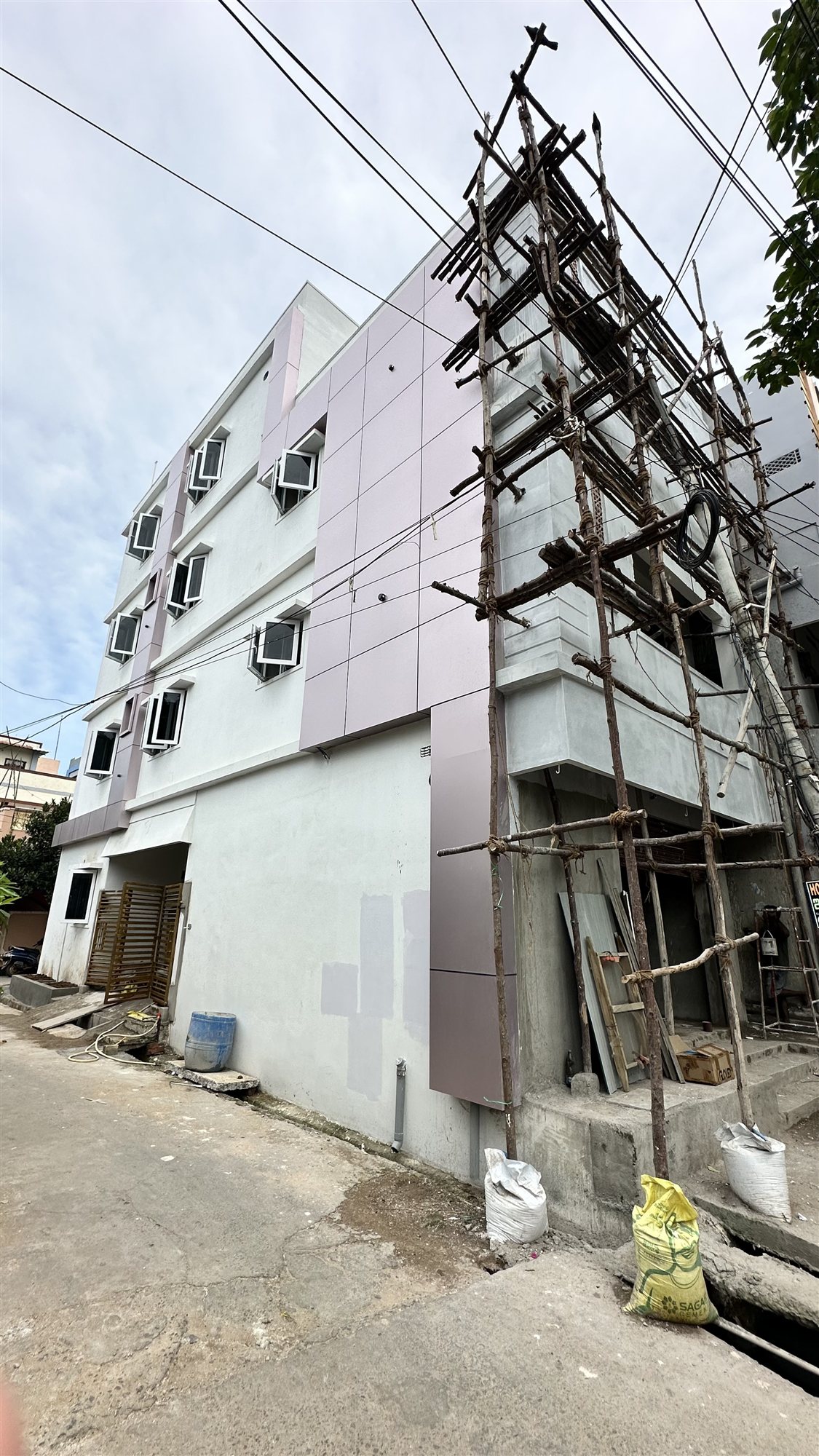
Three-Storey Family Home, Rajahmundry, Andhra Pradesh
2 Min Read
3 tons
Rajahmundry, Andhra Pradesh
Tags:
COmpleted
Overview
A family home won by word of mouth
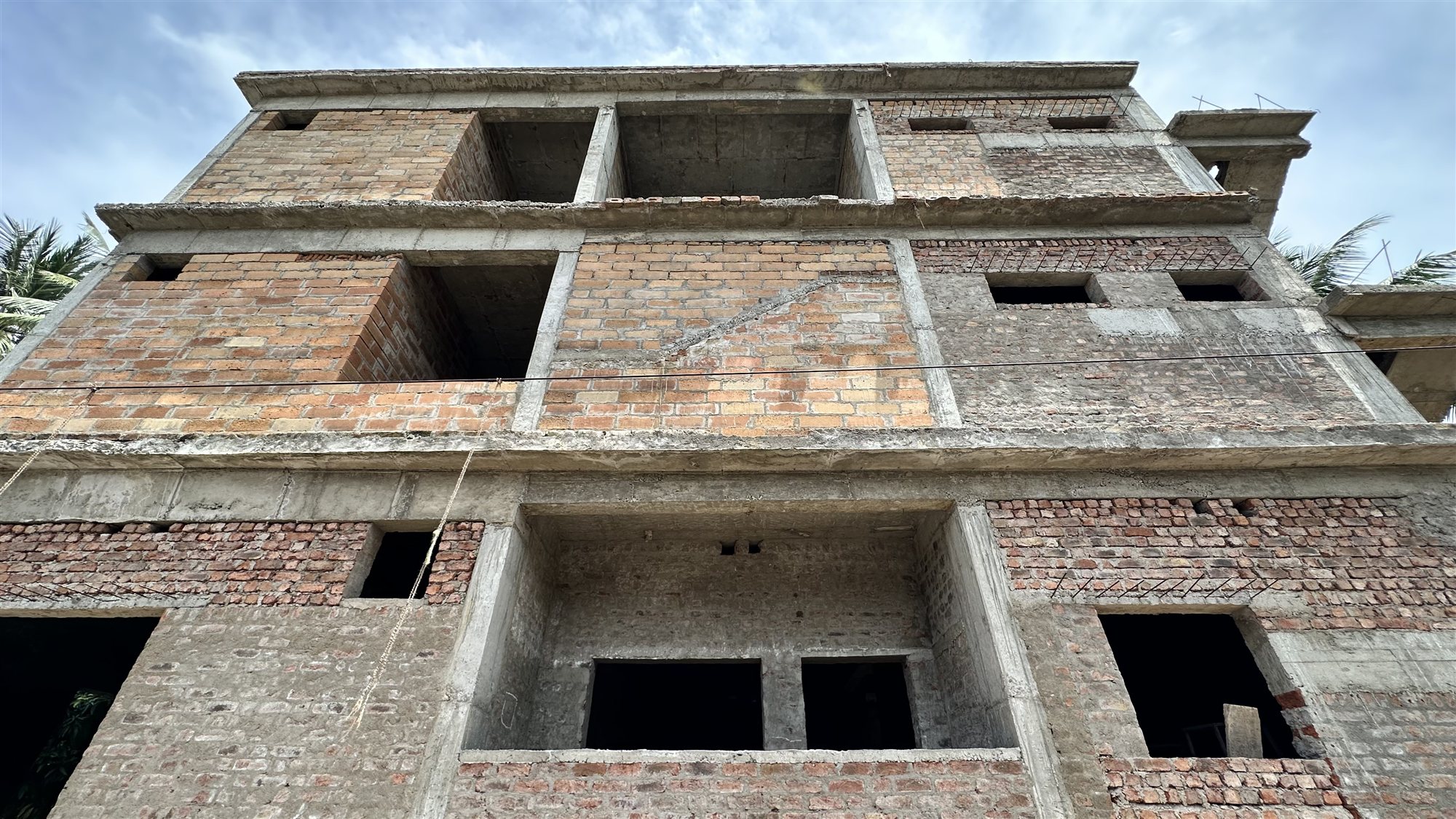
The best sales pitch is a finished home. After seeing Mr. Raveendra Kumar's Agrocrete® house in Rajahmundry and hearing his feedback, Mr. Abhilash R chose the same blocks for his own 2,700 sq ft, three-storey family home in the city. GreenJams supplied 3,000 Agrocrete® blocks for the first and second floors. Completed in February 2025, the home stores about 3 tons of CO₂ in its walls.

The brief
Cooler upper floors in Rajahmundry
Mr. Abhilash R is a petroleum engineer based in Kuwait, building a family home in his hometown of Rajahmundry. Building from abroad, he wanted a material with a proven track record close to home. The upper floors mattered most: in Rajahmundry's heat, top floors take the full force of the sun, and conventional brick walls let much of that heat straight through.
Why Agrocrete®
A proven home just across town
He had already seen the answer in his own city. Mr. Raveendra Kumar's Agrocrete® home impressed him with its looks and performance, and Mr. Kumar's feedback sealed the decision. Agrocrete® walls give up to 3.5x the thermal insulation of conventional masonry, which made them a strong fit for the floors that needed protection from heat the most. It was a choice based on evidence he could see and touch.

What we supplied
3,000 blocks for two upper floors
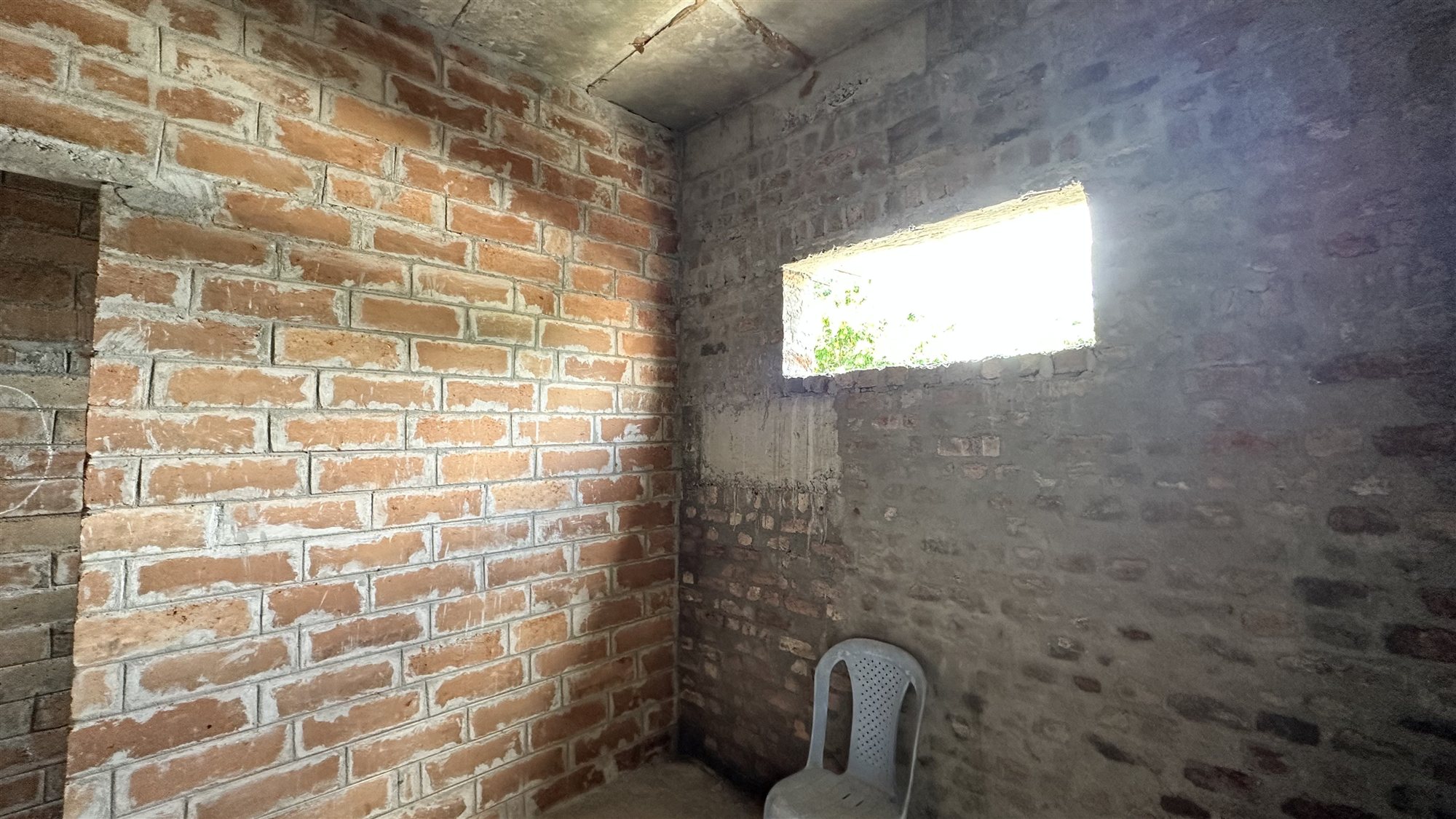
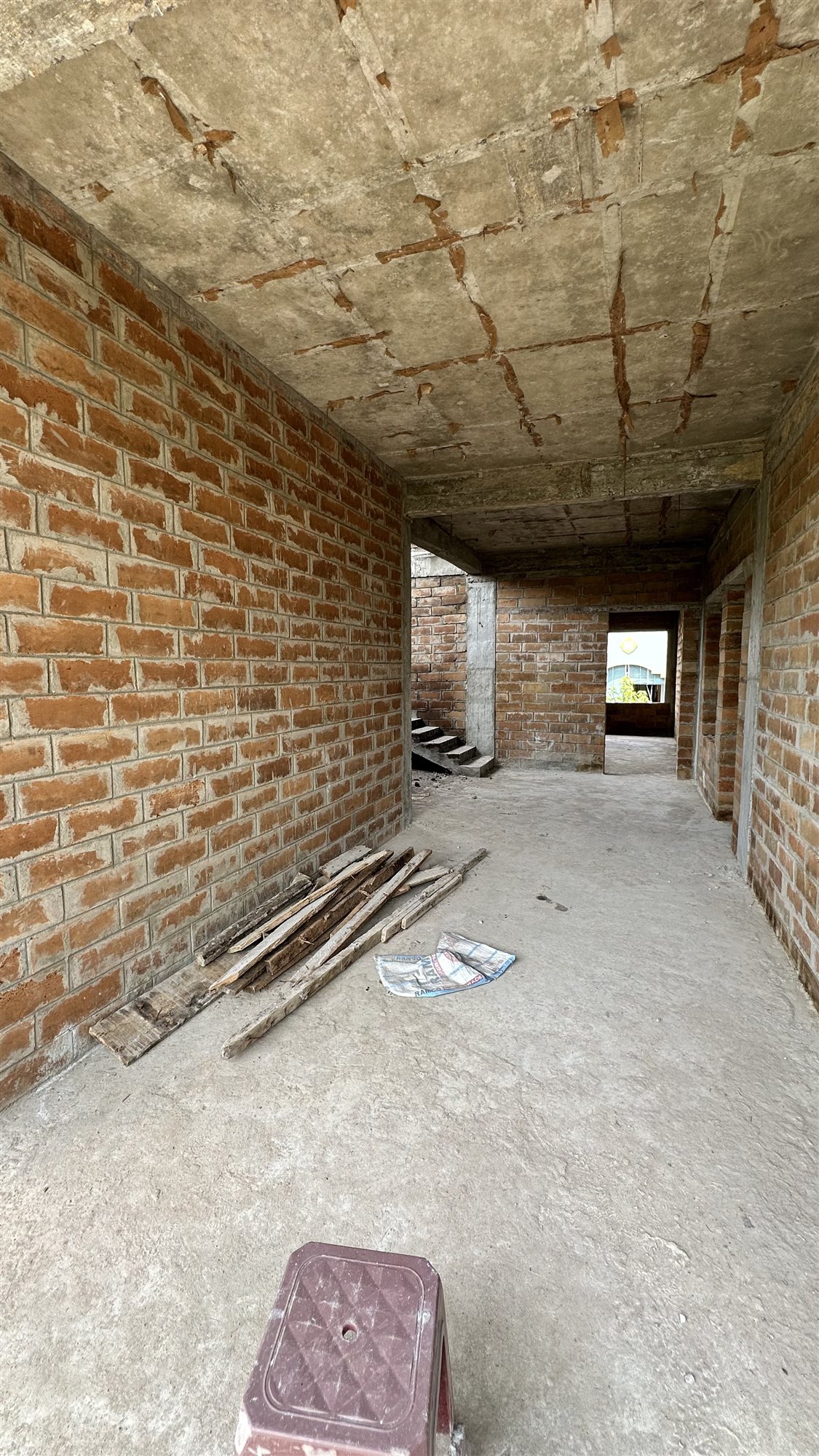
GreenJams supplied 3,000 Agrocrete® blocks for the first and second floors of the home. The blocks are made from paddy straw, fly ash and BINDR™, our cement-free binder, and are IS 2185 and IS 1725 compliant. Inside, the warm-toned blocks were left exposed in parts of the home, including along the staircase, giving the interiors a natural, textured finish that needs no plaster or paint.

On site
Masons who became Agrocrete® fans
The site crew laid the blocks with standard tools and mortar, and quickly became fans of the product. The masons praised the blocks' ease of use and their quality. Larger blocks meant fewer units to lay and less mortar between them than with brick, and the exposed sections inside the house needed no plaster. The build went ahead without any change to how the crew normally worked.

The results
A second Agrocrete® home in the city
The finished home gives the family upper floors with strong thermal insulation, where heat gain is highest. It also marks a milestone for GreenJams in Rajahmundry: a second Agrocrete® home in the city, won entirely by the first. A trusted reference, a finished home and an owner willing to talk about it did the selling. No advertising could have done it better.
Carbon impact
About 3 tons of CO₂ in the walls
The Agrocrete® walls on the home's upper floors store about 3 tons of CO₂. Better insulation on those floors also means less energy spent on cooling over the life of the house. Together, the two Rajahmundry homes show how one satisfied customer can multiply the climate impact of a material through their own network, one finished home at a time, across a whole city.
Explore Agrocrete®





 Agrocrete® Blocks