Sustainable Construction Materials: The Turning Point in Climate-Positive Building
FOR IMMEDIATE RELEASE
Wednesday, February 25, 2026
Written By:
GreenJams
2 min
Tags:
Press & Media
The Turning Point: A History of Construction Materials & Climate Impact
Every era of civilization is written in its buildings.
Stone defined permanence. Timber defined craft. Concrete defined modernity. Each material revolution expanded what humanity could build — and quietly reshaped our relationship with the planet.
Today we are entering the first era where construction must answer not only to engineering limits, but to ecological ones — informed by climate science, lifecycle analysis and material chemistry.
Sustainable construction materials are redefining how buildings respond to climate impact.
The Age of Natural Balance
For most of human history, construction was unintentionally sustainable. Buildings relied on local materials: earth, lime, timber and stone. Transport energy was minimal. Processing temperatures were low. Structures weathered and returned to the soil without toxic legacy.
This balance was not intentional sustainability — it was the result of technological and energy constraints. Energy was scarce, supply chains were short and industrial scale did not exist. As a result, the climate footprint of construction remained small. Humanity built within ecological limits because it had no choice.
The Industrial Revolution removed those limits.
The Concrete Century and Cement’s Carbon Emissions
The invention of Portland cement in the 1800s unlocked a new architectural language. Concrete enabled skyscrapers, megacities, highways and infrastructure at a planetary scale. It became the most consumed manufactured material on Earth.
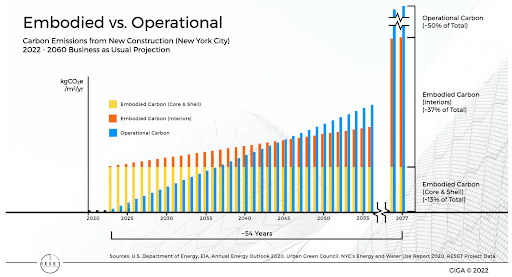
But cement carries a chemical burden. Producing one tonne of conventional cement releases roughly one tonne of CO₂, due to both fossil fuel combustion and the calcination of limestone. Today, cement manufacturing contributes an estimated 7–8% of global carbon emissions — more than aviation and shipping combined.
For over a century, construction optimized for durability and speed while treating carbon as an invisible externality. The atmosphere absorbed the cost. Climate science has since revealed the scale of that debt. What cement enabled at scale, the climate is now forcing us to reconsider at scale.
We are now in a material reckoning.
The Rise of Sustainable Chemistry
The 21st century marks a fundamental shift: we are redesigning construction at the molecular level.
Instead of asking how to use less cement, researchers began asking how to replace it entirely. Industrial by-products such as steel slags, fly ash and agricultural residues are being transformed into high-performance binders and structural materials. Waste streams are becoming feedstocks. Chemistry is becoming a climate strategy.
This shift is central to the development of sustainable construction materials that reduce embodied carbon in buildings.
Sustainable chemistry means designing binders and materials whose fundamental reactions reduce emissions instead of generating them. Research institutions and industry bodies worldwide now recognize material substitution and low-carbon binders as critical levers for reducing embodied emissions.
This is where climate-positive materials emerge.
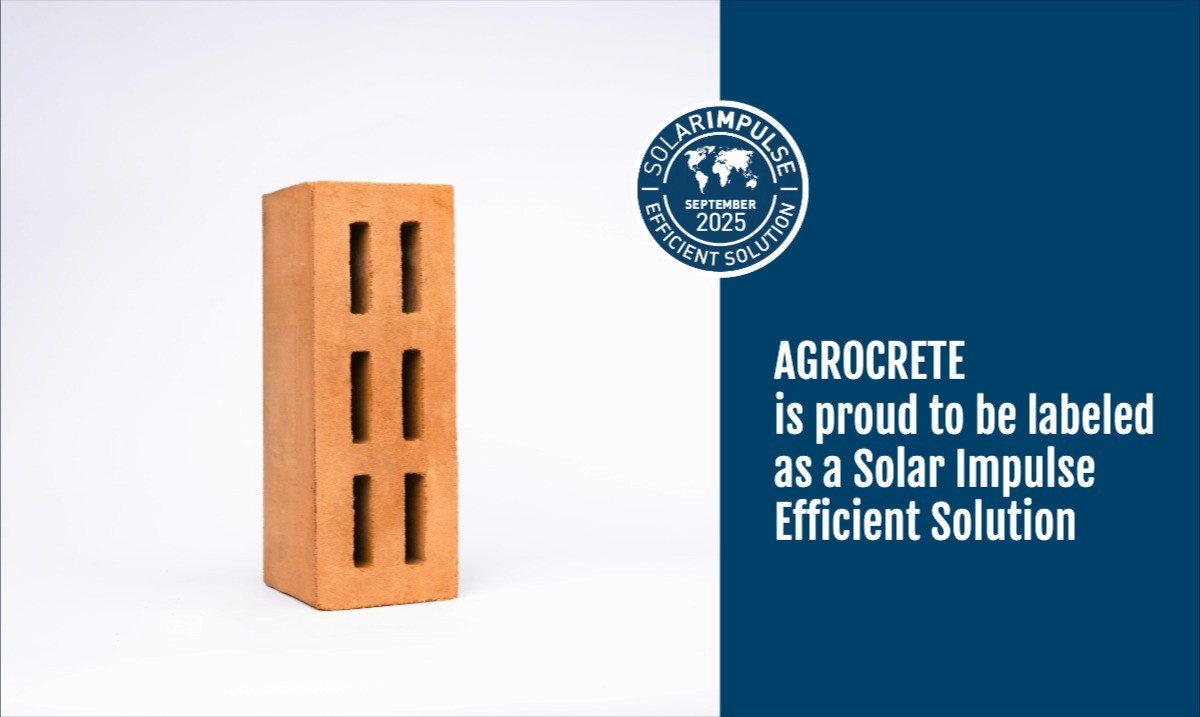
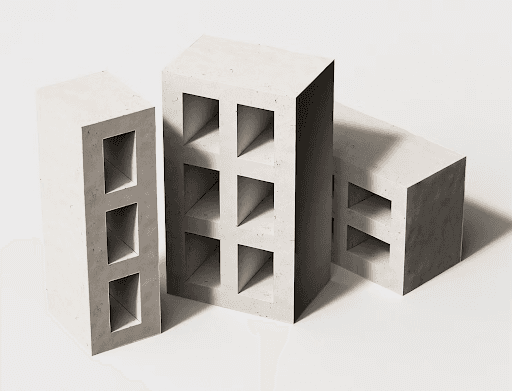
Agrocrete®, for example, represents a new class of carbon-negative masonry. Made from agricultural fibres, industrial by-products and a cement-free binder, each block permanently stores more carbon than it emits during production — transforming walls into long-term carbon reservoirs. Its embodied carbon footprint is approximately –0.14 kg CO₂ per kilogram, meaning it actively removes carbon from the atmosphere while improving thermal insulation and reducing construction energy.
The binder powering this shift is BINDR™, an ultra-low-carbon alternative to cement derived from iron and steel slags. With up to 80% lower carbon intensity than traditional cement and rapid strength gain, it enables mortars and concrete that meet structural demands without inheriting cement’s climate burden.
These are not experimental curiosities. They signal the emergence of sustainable chemistry as a construction baseline.
A New Material Era
For the first time in history, buildings can act as carbon sinks. The built environment can transition from emitter to absorber. That shift is as significant as the invention of concrete itself.
Future historians may describe this moment as the turning point when construction stopped extracting from the planet and began repairing it. The materials we adopt today will define whether cities become climate liabilities — or climate infrastructure.
Every previous era was built for strength. This era must be built for survival.
And survival, now, is a material science question.
Just as concrete once defined modernity, sustainable chemistry will define resilience in the decades ahead.
👉 Stay tuned for more updates on how GreenJams is transforming the built environment, one carbon-negative block at a time.


 Agrocrete® Blocks