Embodied Carbon in Construction: The Climate Debt Explained - My Framer Site

Embodied Carbon in Construction: The Climate Debt Explained

FOR IMMEDIATE RELEASE

Wednesday, February 25, 2026

Written By:

GreenJams

2 min

Tags:

Press & Media
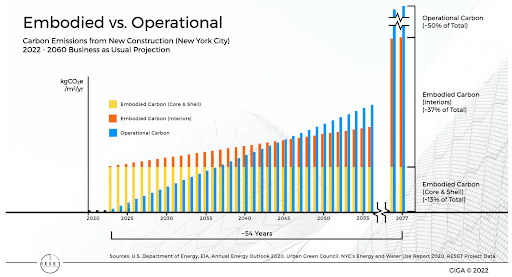
Source: RESET — “Revisiting the Iconic Chart from Architecture 2030” (RESET / Raefer Wallis, 2022)

Embodied Carbon in Construction: Why the Climate Debt Is Growing


Construction isn’t just building shelter — it is accruing a massive carbon debt that threatens global climate targets. Far from being a background contributor, the sector sits at the centre of the climate crisis. This is the problem of embodied carbon in construction — and it demands urgent attention.


Cement is the primary culprit. Its manufacture accounts for roughly 7–8% of global CO₂ emissions, exceeding the combined emissions of aviation and shipping. More than half of construction-related emissions come from cementitious materials, bricks and metals, with cement’s chemical calcination process alone responsible for around 60% of its output. If cement were a country, it would rank as the fourth-largest emitter globally. Steel compounds this burden as cities grow taller and denser.


These emissions aren’t abstract statistics — they translate into heat stress, air pollution, crop failure and infrastructure strain that cities are already struggling to absorb.
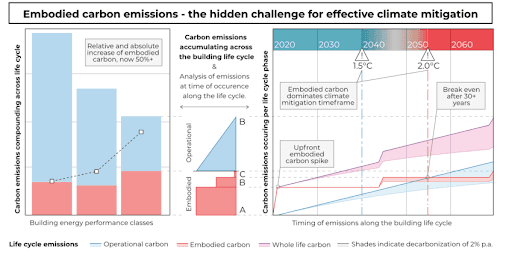

Source: Embodied and operational emissions profile across the building life cycle, Röck et al., One Earth (2023)

The Hidden Carbon Cost of Materials


Embodied carbon in construction refers to emissions released during material extraction, manufacturing, transport and construction. Crucially, these emissions are released upfront — often before a building is occupied — and cannot be offset later through operational efficiency. Life-cycle assessments increasingly show embodied carbon can account for 20–50% of a building’s lifetime emissions, and even more in highly efficient or net-zero buildings. Material choice is therefore one of the most decisive climate levers in modern construction.

Why Embodied Carbon Threatens Climate Targets

The World Green Building Council has identified embodied carbon as one of the fastest-growing sources of building emissions worldwide. Reducing operational energy alone will not deliver the emissions cuts required to meet the Paris Agreement. The industry must cut carbon at the source through material innovation, smarter design and a fundamental rethink of how buildings are made.

Every tonne of carbon avoided today prevents decades of cumulative climate damage. The next decade is decisive. The buildings designed and specified today will lock in emissions profiles for 50–100 years.
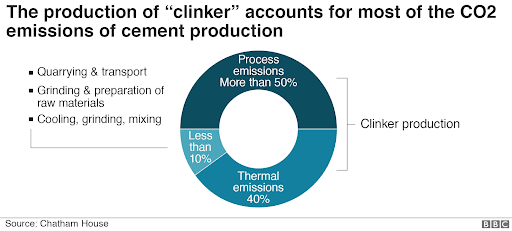


Source: BBC News / Chatham House

From Carbon Emissions to Carbon Storage


This is where GreenJams’ work becomes climate-critical.

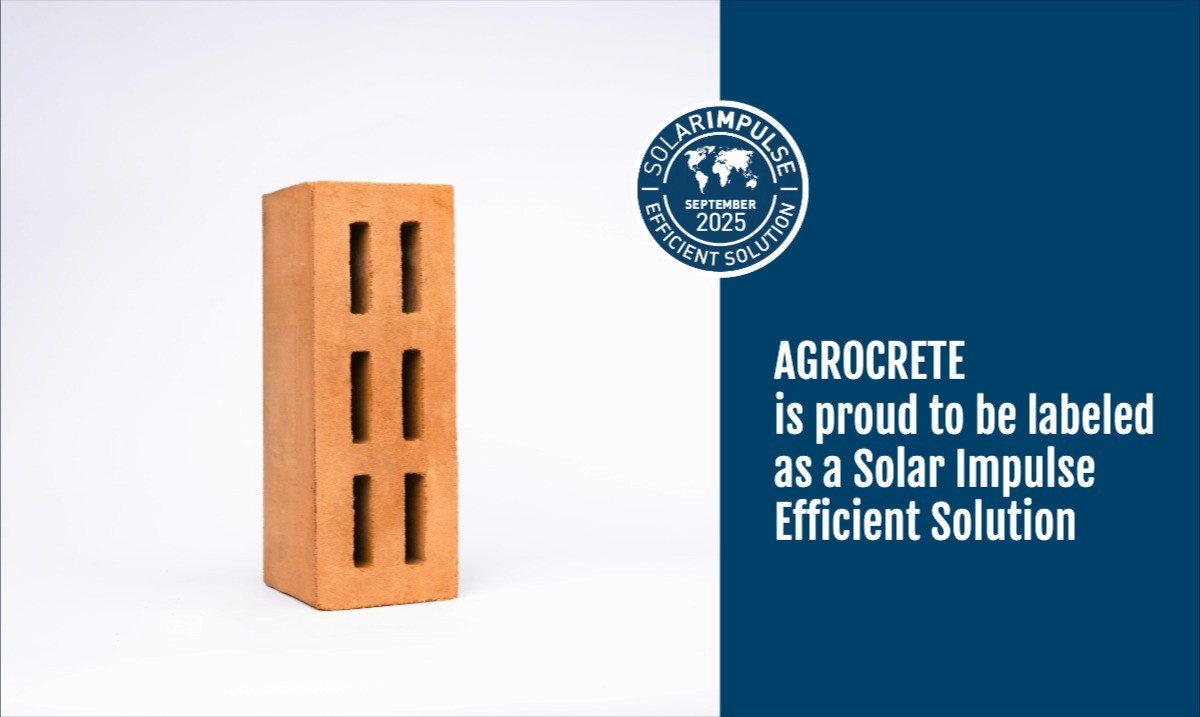
GreenJams addresses embodied carbon in construction at the material layer, developing bio-based construction materials from agricultural residues that would otherwise be burned in open fields. Its flagship product, Agrocrete®, replaces conventional clay bricks and cement-intensive masonry with a mineralised, crop-residue-based alternative.

According to its independently verified Environmental Product Declaration (EN 15804+A2), Agrocrete® demonstrates a net-negative cradle-to-gate global warming potential of –0.14 kg CO₂e per kg of material (A1–A3), driven by biogenic carbon storage from agricultural straw. That equates to –140 kg CO₂e per tonne of material before construction even begins — in stark contrast to conventional masonry products that carry strongly positive embodied emissions at the same stage.

The future of construction is not about minimizing harm — it is about designing buildings that actively repair the atmosphere.

As carbon regulation tightens and ESG scrutiny deepens, embodied carbon is moving from the margins to the mainstream of construction decision-making. The embodied carbon debt of construction is real — but it is not inevitable. The transition to carbon-storing construction is no longer a question of possibility — it is a question of speed.

Climate action in construction doesn’t start at building operations. It starts at the wall.

To learn more about carbon-storing materials and embodied carbon accounting, explore our research and project case studies.


👉 Stay tuned for more updates on how GreenJams is transforming the built environment, one carbon-negative block at a time.
Suggested Blogs

Feb 25, 2026

2 min

Sustainable Construction Materials: The Turning Point in Climate-Positive Building

FOR IMMEDIATE RELEASE

Tags:

Press & Media

Feb 25, 2026

2 min

Climate-Positive Infrastructure vs Net Zero Explained

FOR IMMEDIATE RELEASE

Tags:

Press & Media

Feb 25, 2026

2 min

The Circular Mandate: Circular Construction Future

FOR IMMEDIATE RELEASE

Tags:

Press & Media

Source: RESET — “Revisiting the Iconic Chart from Architecture 2030” (RESET / Raefer Wallis, 2022)

Feb 25, 2026

2 min

Embodied Carbon in Construction: The Climate Debt Explained

FOR IMMEDIATE RELEASE

Tags:

Press & Media

Feb 25, 2026

2 min

Climate-Positive Construction: The Carbon Counter-Attack

FOR IMMEDIATE RELEASE

Tags:

Press & Media

GreenJams’ Agrocrete® Becomes India’s Only Carbon-Negative Building Material to Earn the Prestigious Solar Impulse Efficient Solution Label

Jan 24, 2026

2 min

GreenJams’ Agrocrete® Becomes India’s Only Carbon-Negative Building Material to Earn the Prestigious Solar Impulse Efficient Solution Label

FOR IMMEDIATE RELEASE

Tags:

Press & Media

GreenJams’ Agrocrete® Becomes India’s Only Carbon-Negative Building Material to Earn the Prestigious Solar Impulse Efficient Solution Label

Dec 12, 2025

4 min

Heatwaves and Mivan Construction

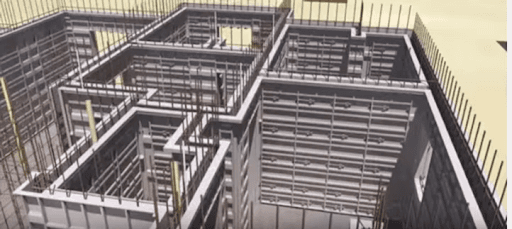
‘Mivan Shuttering’ has been a godsend for the construction industry. That’s because Mivan technology enables extremely rapid construction, improves durability and earthquake resistance, and reduces wall thickness and increases carpet area in high rise buildings.

The Mivan construction technology essentially comprises a highly durable aluminium formwork fabricated in the shape and layout of the building including the walls, columns, beams, and slabs. It is extremely modular and uses the same formwork for all the floors of the building. The steel reinforcement is fixed within the formwork and concrete is poured into it to make the different members of the building.

Tags:

Technology

GreenJams’ Agrocrete® Becomes India’s Only Carbon-Negative Building Material to Earn the Prestigious Solar Impulse Efficient Solution Label

Dec 12, 2025

5 min

Agrocrete®: A weapon for the war against climate change

It was never an argument - climate change is real, and it demands urgent action. As per the IPCC 2018 Special Report on Global Warming of 1.5°C, it is estimated that by 2050, if the world isn’t fully carbon neutral, then global temperatures could increase by much more than 1.5C. However, as per Piers Froster, one of the lead authors of the landmark paper, there is still hope. He stated, “If the world can substantially reduce emissions in the 2020s and get to net zero carbon emissions by 2050, temperature rise can still be limited to 1.5C”.

This begs the question - how can we overturn climate change quickly and effectively? The surest way forward is geoengineering, which is essentially a way for human beings to manage the earth’s climate in deliberate ways. An effective, low cost way of geoengineering is to devise methods of Carbon Dioxide Removal, or CDR. Activities such as afforestation and reforestation are popular methods of CDR, however, given the time scale it takes to cause real impact, it isn’t a practical method despite its obvious benefits.

It is for this reason that more and more scientific and institutional efforts are directed towards creating ways of achieving CDR in a highly effective and relatively low-cost manner.

Tags:

product

Suggested Blogs

Feb 25, 2026

2 min

Sustainable Construction Materials: The Turning Point in Climate-Positive Building

FOR IMMEDIATE RELEASE

Tags:

Press & Media

Feb 25, 2026

2 min

Climate-Positive Infrastructure vs Net Zero Explained

FOR IMMEDIATE RELEASE

Tags:

Press & Media

Feb 25, 2026

2 min

The Circular Mandate: Circular Construction Future

FOR IMMEDIATE RELEASE

Tags:

Press & Media

Source: RESET — “Revisiting the Iconic Chart from Architecture 2030” (RESET / Raefer Wallis, 2022)

Feb 25, 2026

2 min

Embodied Carbon in Construction: The Climate Debt Explained

FOR IMMEDIATE RELEASE

Tags:

Press & Media

Feb 25, 2026

2 min

Climate-Positive Construction: The Carbon Counter-Attack

FOR IMMEDIATE RELEASE

Tags:

Press & Media

GreenJams’ Agrocrete® Becomes India’s Only Carbon-Negative Building Material to Earn the Prestigious Solar Impulse Efficient Solution Label

Jan 24, 2026

2 min

GreenJams’ Agrocrete® Becomes India’s Only Carbon-Negative Building Material to Earn the Prestigious Solar Impulse Efficient Solution Label

FOR IMMEDIATE RELEASE

Tags:

Press & Media

Dec 12, 2025

4 min

Heatwaves and Mivan Construction

‘Mivan Shuttering’ has been a godsend for the construction industry. That’s because Mivan technology enables extremely rapid construction, improves durability and earthquake resistance, and reduces wall thickness and increases carpet area in high rise buildings.

The Mivan construction technology essentially comprises a highly durable aluminium formwork fabricated in the shape and layout of the building including the walls, columns, beams, and slabs. It is extremely modular and uses the same formwork for all the floors of the building. The steel reinforcement is fixed within the formwork and concrete is poured into it to make the different members of the building.

Tags:

Technology

Dec 12, 2025

5 min

Agrocrete®: A weapon for the war against climate change

It was never an argument - climate change is real, and it demands urgent action. As per the IPCC 2018 Special Report on Global Warming of 1.5°C, it is estimated that by 2050, if the world isn’t fully carbon neutral, then global temperatures could increase by much more than 1.5C. However, as per Piers Froster, one of the lead authors of the landmark paper, there is still hope. He stated, “If the world can substantially reduce emissions in the 2020s and get to net zero carbon emissions by 2050, temperature rise can still be limited to 1.5C”.

This begs the question - how can we overturn climate change quickly and effectively? The surest way forward is geoengineering, which is essentially a way for human beings to manage the earth’s climate in deliberate ways. An effective, low cost way of geoengineering is to devise methods of Carbon Dioxide Removal, or CDR. Activities such as afforestation and reforestation are popular methods of CDR, however, given the time scale it takes to cause real impact, it isn’t a practical method despite its obvious benefits.

It is for this reason that more and more scientific and institutional efforts are directed towards creating ways of achieving CDR in a highly effective and relatively low-cost manner.

Tags:

product

Frequently asked questions

Have Questions?

We’ve Got Answers.

What is Agrocrete®?

Agrocrete® is a carbon-negative building block made from upcycled crop residues and industrial by-products. It’s stronger, lighter, cooler, and more durable than conventional bricks, while also reducing environmental impact.

What does ‘carbon-negative’ mean?

How is Agrocrete® better than regular bricks?

Is Agrocrete® certified?

Where can it be used?

Is it termite-resistant and fire-resistant?

Will it change my construction process?

What’s its environmental impact?

Frequently asked questions

Have Questions?

We’ve Got Answers.

What is Agrocrete®?

Agrocrete® is a carbon-negative building block made from upcycled crop residues and industrial by-products. It’s stronger, lighter, cooler, and more durable than conventional bricks, while also reducing environmental impact.

What does ‘carbon-negative’ mean?

How is Agrocrete® better than regular bricks?

Is Agrocrete® certified?

Where can it be used?

Is it termite-resistant and fire-resistant?

Will it change my construction process?

What’s its environmental impact?

Frequently asked questions

Have Questions?

We’ve Got Answers.

What is Agrocrete®?

Agrocrete® is a carbon-negative building block made from upcycled crop residues and industrial by-products. It’s stronger, lighter, cooler, and more durable than conventional bricks, while also reducing environmental impact.

What does ‘carbon-negative’ mean?

How is Agrocrete® better than regular bricks?

Is Agrocrete® certified?

Where can it be used?

Is it termite-resistant and fire-resistant?

Will it change my construction process?

What’s its environmental impact?