Written By:
Tarun Jami
4 min
The Circular Mandate: Circular Construction Future
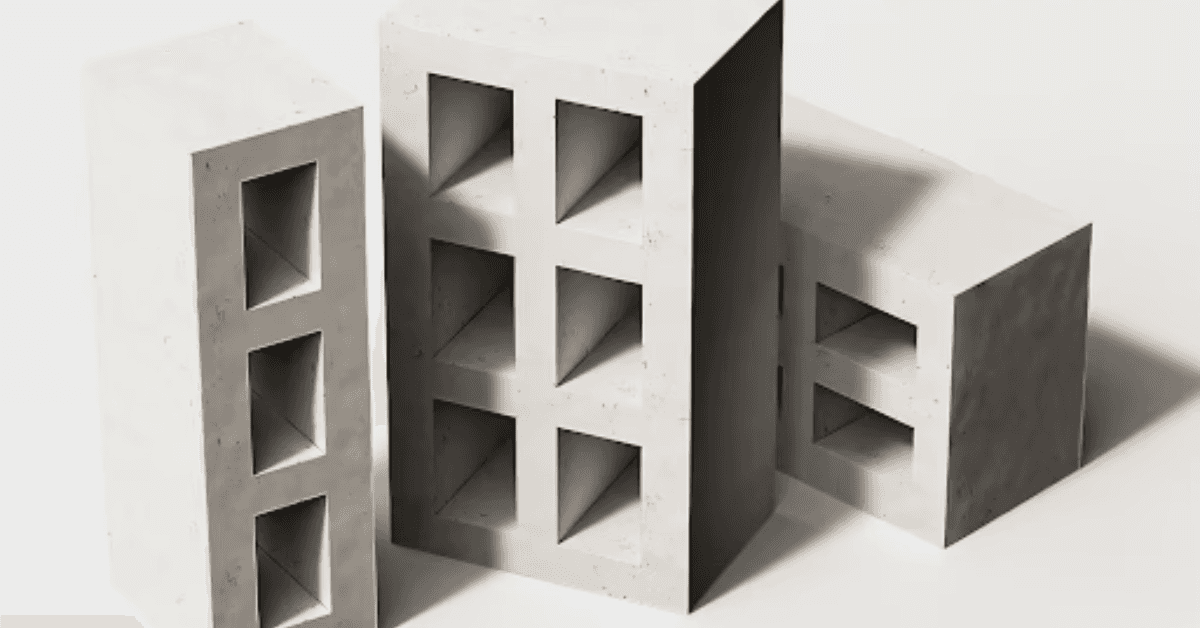
Construction is one of the world’s most extractive industries. It consumes vast quantities of virgin raw materials while generating enormous volumes of waste. In a resource-limited world, the linear “take, make, discard” model no longer works. This article explains why circular construction, which turns industrial and agricultural waste into building materials, is fast becoming a necessity in India and beyond.
Tags:
Sustainability
The Circular Mandate: Turning Industrial Waste into Structural Assets
The climate crisis is inseparable from a deeper structural problem: global resource depletion. The UNEP International Resource Panel’s Global Resources Outlook 2024 found that the world’s use of materials has more than tripled since 1970, from 30 to 106 billion tonnes a year, and that extracting and processing resources drives over 60% of planet-warming emissions. Sand shortages and rising energy inputs are no longer distant risks. They are present-day constraints.
This is where the circular mandate emerges, redefining circular construction as a necessity rather than a sustainability preference.
Construction’s Resource and Waste Problem
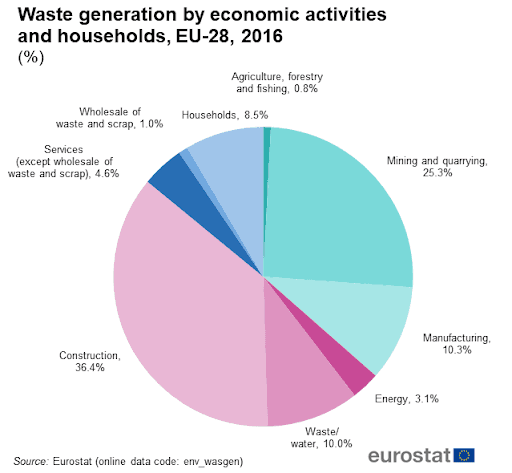
Buildings sit at the centre of this problem. The UNEP and GlobalABC Global Status Report for Buildings and Construction 2025–2026 finds that the sector accounts for nearly 50% of global material extraction. It is also a leading source of waste. In the EU, construction generated 38.4% of all waste in 2022, according to Eurostat.
Meanwhile, agricultural and industrial by-products such as fly ash, slag, crop residue and mineral waste are routinely treated as disposal problems rather than resources. The result is a dual failure: ecosystems are depleted to feed new construction, while usable by-products are burned, landfilled or dumped, adding to pollution and emissions.
Circular Construction as a Strategic Circular Economy Response
Circular construction offers a different logic. The Ellen MacArthur Foundation describes a circular economy as one that eliminates waste and pollution, circulates products and materials at their highest value, and regenerates nature. In construction, that means designing buildings so that waste becomes feedstock, materials stay in use longer and extraction is minimised from the outset.
A circular economy in construction is not recycling as an afterthought. It is the intentional conversion of waste streams into long-term structural assets. Agricultural residues and industrial by-products contain stored carbon and mineral value that can be re-engineered into building components, reducing dependence on virgin materials while addressing emissions at their source.
Under the circular mandate, waste is not a liability. It is structural capital.
Why Circular Construction Is Critical for India and Rapidly Urbanising Economies
In India, the stakes are particularly high. A 2022 study in Nature Communications estimates that India generates around 500 million tonnes of crop residue a year and burns about 100 million tonnes of it in the fields. The same study links the smoke to tens of thousands of premature deaths each year, concentrated in Punjab, Haryana and Uttar Pradesh. At the same time, rapid urbanisation drives demand for concrete, bricks and steel.
Policy is moving in the same direction. NITI Aayog’s Circular Economy Cell coordinates sector action plans with the line ministries. The Environment (Construction and Demolition) Waste Management Rules, 2025, in force from 1 April 2026, introduce extended producer responsibility for C&D waste and require large projects to use processed waste.
Treating agricultural waste as a construction input links two crises, air pollution and material scarcity, into a single systems-level solution. For rapidly urbanising economies, circular construction is not just environmental policy. It is supply chain strategy.
Turning Industrial and Agricultural Waste into Structural Assets
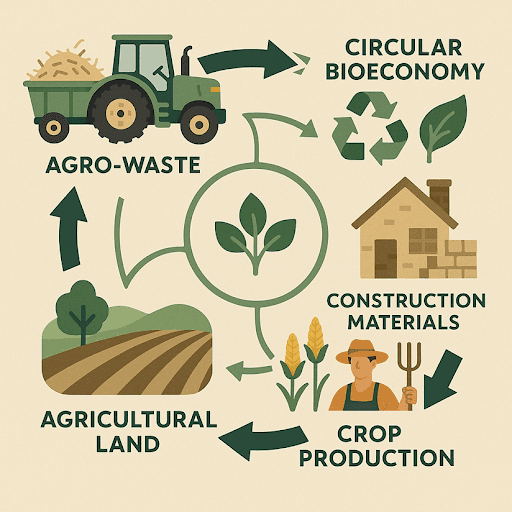
GreenJams operates at this intersection of circularity and climate action. Agrocrete® bricks and blocks turn two waste streams, paddy straw from the fields and fly ash from power plants, into durable, carbon-storing masonry. They are bound with BINDR™, an alkali-activated binder that the GreenJams catalogue lists as over 90% recycled industrial by-products, with zero Portland cement. This diverts biomass from open burning, reduces reliance on cement-heavy materials and embeds circularity directly into the built environment.
The benefits extend beyond emissions. Circular materials reduce pressure on land, water and energy resources, stabilise supply chains and lower exposure to volatile raw material prices. Lighter, locally sourced inputs also cut transport demand and the Scope 3 emissions that come with it, strengthening resilience across the construction value chain.
At Sandila, Uttar Pradesh, ITC Ltd built a 2.6 km perimeter wall with 44,200 Agrocrete® blocks. Using crop residue that would otherwise be burned, and replacing conventional masonry, avoided 251.29 tons of emissions, on top of the 73 tons of CO₂ stored in the wall itself.
Why the circular mandate is becoming a procurement requirement
As global demand for infrastructure grows, the question is no longer whether circular construction is desirable, but whether it is unavoidable. Circularity is shifting from sustainability preference to procurement requirement as governments and investors tighten resource and carbon accountability. India’s new C&D waste rules are one early sign of that shift.
Building more with less, with less extraction, less waste and less carbon, is the only path compatible with planetary limits. The transition is not about compromise. It is about redesigning construction to work within the material realities of the 21st century. The future of construction lies not in mining deeper, but in re-engineering what we already discard.
See how material choices are measured in our practical guide to embodied carbon in buildings, read why climate-positive construction goes further than net zero, or request an Agrocrete® sample.
Related posts
•
12 min
Read more
Sustainability
Sustainable Building Materials in India: 10 Alternatives to Conventional Construction
Sustainable building materials India builders can use today: 10 lower-carbon alternatives, where each fits, and what test data to ask for first.

•
10 min
Read more
Sustainability
How to Keep Your House Cool in Indian Summers Without Relying Only on AC
Keep house cool in summer, India-style: roof and wall insulation, shading, cross-ventilation and smart orientation. See which fixes to make first.

•
9 min
Read more
Sustainability
Stubble Burning in India: Can Crop Waste Become a Building Material?
Looking for a stubble burning solution India can scale? See how paddy straw can become a building material, and what still stands in the way.

 Agrocrete® spec sheet (PDF)