Making a Geoengineering Case for Hemp - My Framer Site

Making a Geoengineering Case for Hemp

Interestingly, while the representatives of the 196 parties to the UN, in a rare consensus have agreed to cap the increase in global temperature to less than 1.5OC at the Accord de Paris, there is an interestingly rarer consensus amongst the scientific community that geoengineering is the way to go.

Tuesday, September 23, 2025

Written By:

Tarun Jami

4 min

Tags:

Technology
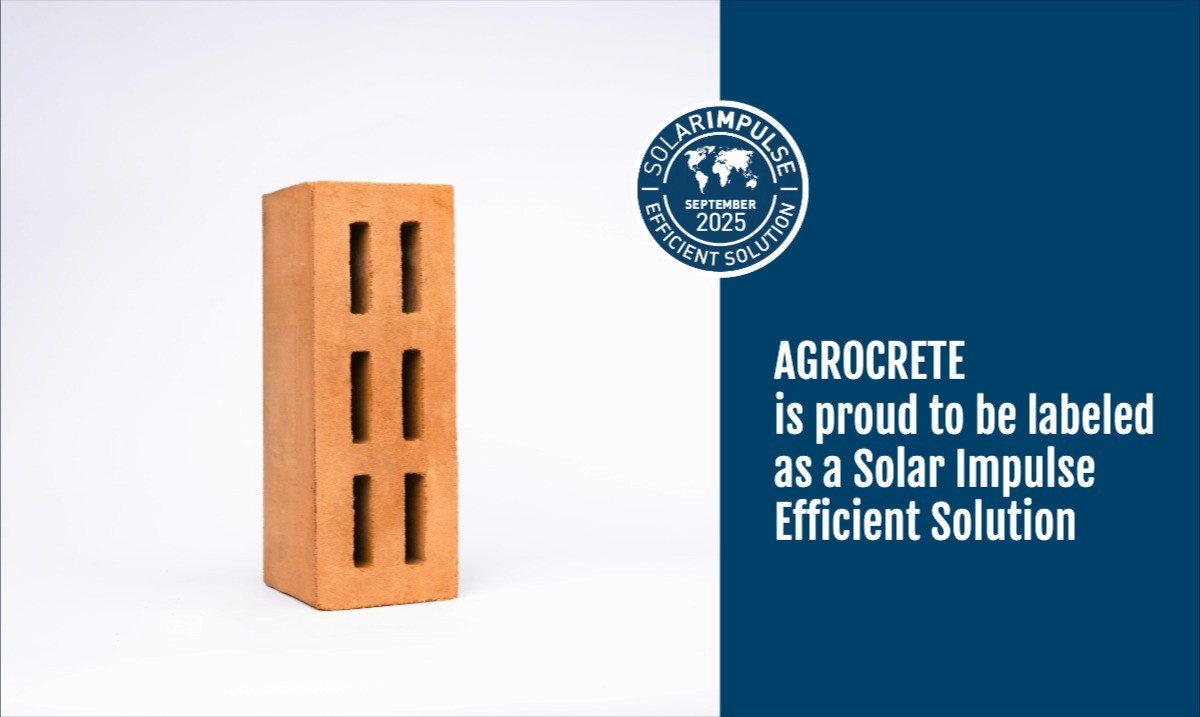
GreenJams’ Agrocrete® Becomes India’s Only Carbon-Negative Building Material to Earn the Prestigious Solar Impulse Efficient Solution Label

But, there is a lack of understanding of what geoengineering entails. Geoengineering is the deliberate, large-scale manipulation of the environment to counter some effects of anthropogenic climate change. This, in effect, is the delicate act of balancing the sequestration and emission of carbon dioxide and other green house gas emissions in such a way that it does not result in the rise of global temperature. Some geoengineering strategies have been put forth such as Carbon Dioxide Reduction (CDR) through carbon sequestration and Albedo Modification (AM) through the implementation of other elaborate mechanisms such as, seeding large quantities of chemicals in the atmosphere in an attempt to reflect solar radiations that may or may not be very beneficial to the environment in the long run. While large-scale manipulation of the environment might seem like the way to go, a principal debate on how far to go is still at large. But, the lengths that we can go with manipulating the environment much unlike science fiction movies is not the decision of a few.

However, CDR strategies are currently the best bets that we can place. The advantages of creating a CDR strategy for achieving geoengineering is that there isn’t a large-scale impact on the environment, since this involves activities that are more or less “natural”. A lot of researchers argue that AM strategies are fundamentally wrong because they entail the application of anthropogenic intervention to problems caused by anthropogenic activities in a system that is governed by nature’s laws. Many researchers are hence in favour of CDR strategies since there isn’t a large-scale anthropogenic modification of the environment, but only a “reversal” of the results of historical anthropogenic activities that originally led to the problem of climate change. Hence, a particularly favourable CDR strategy, apart from reforestation and afforestation, is the repurposing of deforested lands to grow crops that have a high carbon sequestration capability and great economic value.

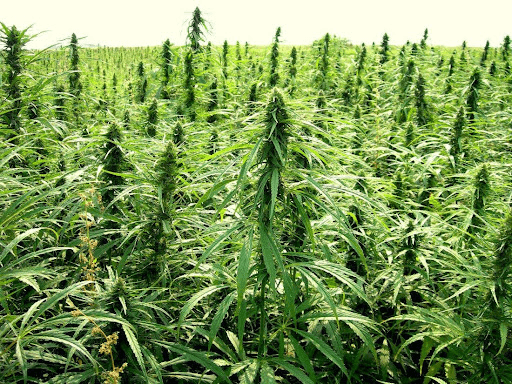
So how does hemp fit into all this? Hemp, otherwise, popularly known as cannabis, is a crop that has a very high yield. With about 10 – 15 tonnes of biomass yield per hectare, the industrial hemp crop is arguably the easiest growing crop with the highest yield. A study that I had conducted in 2016 had proven that every kilogram of the hemp stalk sequesters about 1.8 to 2 kg of carbon dioxide. Amazingly, this translates to offsets of about 20 to 30 tonnes of anthropogenic carbon dioxide emissions for every hectare of the hemp crop. It needn’t be explained that when the industrial hemp crop is grown in about a 100,000 hectares of land, the produce sequesters about 2 – 3 million tonnes of carbon dioxide, and in 1 million hectares would mean about 20 to 30 million tonnes of carbon dioxide sequestration. While this does seem like a large number, it is impossible to completely offset the 50 billion metric tonnes of carbon dioxide equivalent global GHG emissions. However, increasing the quantum of lands under hemp cultivation could start making sense.

If the plant’s amazing capability to counter global warming and making our home a liveable place isn’t incentive enough, maybe the suitability of crop for a multitude of applications needs to be discussed. Industrial hemp is a plant that has about 25,000 documented applications ranging from man’s basic needs of food clothing, shelter, recreation and medicine to Nano-technology and defence applications. Hemp homes are amongst the most energy efficient homes and have the least amount of embodied energy amongst building materials that are not made from recycled materials and help reduce operational energies too. Once made a part of mainstream agriculture, hemp homes shall also be cost effective and cheaper than most constructions. Hemp seeds are considered to be a super-food as they’re a rich source of protein with about 32g per 100g serving and omega-3 fatty acids with an optimal omega profile.

It is evident that hemp generates great environmental as well as economic value. But since it’s an agricultural product, it also generates great social value. While a successful case for hemp in the geoengineering context is made, the strategies will be successful only with concerted efforts synergising geoengineering and changes in the economic and social structures.

👉 Stay tuned for more updates on how GreenJams is transforming the built environment, one carbon-negative block at a time.

Suggested Blogs

Feb 25, 2026

2 min

Sustainable Construction Materials: The Turning Point in Climate-Positive Building

FOR IMMEDIATE RELEASE

Tags:

Press & Media

Feb 25, 2026

2 min

Climate-Positive Infrastructure vs Net Zero Explained

FOR IMMEDIATE RELEASE

Tags:

Press & Media

Feb 25, 2026

2 min

The Circular Mandate: Circular Construction Future

FOR IMMEDIATE RELEASE

Tags:

Press & Media

Source: RESET — “Revisiting the Iconic Chart from Architecture 2030” (RESET / Raefer Wallis, 2022)

Feb 25, 2026

2 min

Embodied Carbon in Construction: The Climate Debt Explained

FOR IMMEDIATE RELEASE

Tags:

Press & Media

Feb 25, 2026

2 min

Climate-Positive Construction: The Carbon Counter-Attack

FOR IMMEDIATE RELEASE

Tags:

Press & Media

GreenJams’ Agrocrete® Becomes India’s Only Carbon-Negative Building Material to Earn the Prestigious Solar Impulse Efficient Solution Label

Jan 24, 2026

2 min

GreenJams’ Agrocrete® Becomes India’s Only Carbon-Negative Building Material to Earn the Prestigious Solar Impulse Efficient Solution Label

FOR IMMEDIATE RELEASE

Tags:

Press & Media

GreenJams’ Agrocrete® Becomes India’s Only Carbon-Negative Building Material to Earn the Prestigious Solar Impulse Efficient Solution Label

Dec 12, 2025

4 min

Heatwaves and Mivan Construction

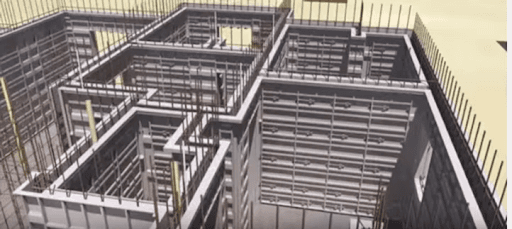
‘Mivan Shuttering’ has been a godsend for the construction industry. That’s because Mivan technology enables extremely rapid construction, improves durability and earthquake resistance, and reduces wall thickness and increases carpet area in high rise buildings.

The Mivan construction technology essentially comprises a highly durable aluminium formwork fabricated in the shape and layout of the building including the walls, columns, beams, and slabs. It is extremely modular and uses the same formwork for all the floors of the building. The steel reinforcement is fixed within the formwork and concrete is poured into it to make the different members of the building.

Tags:

Technology

GreenJams’ Agrocrete® Becomes India’s Only Carbon-Negative Building Material to Earn the Prestigious Solar Impulse Efficient Solution Label

Dec 12, 2025

5 min

Agrocrete®: A weapon for the war against climate change

It was never an argument - climate change is real, and it demands urgent action. As per the IPCC 2018 Special Report on Global Warming of 1.5°C, it is estimated that by 2050, if the world isn’t fully carbon neutral, then global temperatures could increase by much more than 1.5C. However, as per Piers Froster, one of the lead authors of the landmark paper, there is still hope. He stated, “If the world can substantially reduce emissions in the 2020s and get to net zero carbon emissions by 2050, temperature rise can still be limited to 1.5C”.

This begs the question - how can we overturn climate change quickly and effectively? The surest way forward is geoengineering, which is essentially a way for human beings to manage the earth’s climate in deliberate ways. An effective, low cost way of geoengineering is to devise methods of Carbon Dioxide Removal, or CDR. Activities such as afforestation and reforestation are popular methods of CDR, however, given the time scale it takes to cause real impact, it isn’t a practical method despite its obvious benefits.

It is for this reason that more and more scientific and institutional efforts are directed towards creating ways of achieving CDR in a highly effective and relatively low-cost manner.

Tags:

product

Suggested Blogs

Feb 25, 2026

2 min

Sustainable Construction Materials: The Turning Point in Climate-Positive Building

FOR IMMEDIATE RELEASE

Tags:

Press & Media

Feb 25, 2026

2 min

Climate-Positive Infrastructure vs Net Zero Explained

FOR IMMEDIATE RELEASE

Tags:

Press & Media

Feb 25, 2026

2 min

The Circular Mandate: Circular Construction Future

FOR IMMEDIATE RELEASE

Tags:

Press & Media

Source: RESET — “Revisiting the Iconic Chart from Architecture 2030” (RESET / Raefer Wallis, 2022)

Feb 25, 2026

2 min

Embodied Carbon in Construction: The Climate Debt Explained

FOR IMMEDIATE RELEASE

Tags:

Press & Media

Feb 25, 2026

2 min

Climate-Positive Construction: The Carbon Counter-Attack

FOR IMMEDIATE RELEASE

Tags:

Press & Media

GreenJams’ Agrocrete® Becomes India’s Only Carbon-Negative Building Material to Earn the Prestigious Solar Impulse Efficient Solution Label

Jan 24, 2026

2 min

GreenJams’ Agrocrete® Becomes India’s Only Carbon-Negative Building Material to Earn the Prestigious Solar Impulse Efficient Solution Label

FOR IMMEDIATE RELEASE

Tags:

Press & Media

Dec 12, 2025

4 min

Heatwaves and Mivan Construction

‘Mivan Shuttering’ has been a godsend for the construction industry. That’s because Mivan technology enables extremely rapid construction, improves durability and earthquake resistance, and reduces wall thickness and increases carpet area in high rise buildings.

The Mivan construction technology essentially comprises a highly durable aluminium formwork fabricated in the shape and layout of the building including the walls, columns, beams, and slabs. It is extremely modular and uses the same formwork for all the floors of the building. The steel reinforcement is fixed within the formwork and concrete is poured into it to make the different members of the building.

Tags:

Technology

Dec 12, 2025

5 min

Agrocrete®: A weapon for the war against climate change

It was never an argument - climate change is real, and it demands urgent action. As per the IPCC 2018 Special Report on Global Warming of 1.5°C, it is estimated that by 2050, if the world isn’t fully carbon neutral, then global temperatures could increase by much more than 1.5C. However, as per Piers Froster, one of the lead authors of the landmark paper, there is still hope. He stated, “If the world can substantially reduce emissions in the 2020s and get to net zero carbon emissions by 2050, temperature rise can still be limited to 1.5C”.

This begs the question - how can we overturn climate change quickly and effectively? The surest way forward is geoengineering, which is essentially a way for human beings to manage the earth’s climate in deliberate ways. An effective, low cost way of geoengineering is to devise methods of Carbon Dioxide Removal, or CDR. Activities such as afforestation and reforestation are popular methods of CDR, however, given the time scale it takes to cause real impact, it isn’t a practical method despite its obvious benefits.

It is for this reason that more and more scientific and institutional efforts are directed towards creating ways of achieving CDR in a highly effective and relatively low-cost manner.

Tags:

product

Frequently asked questions

Have Questions?

We’ve Got Answers.

What is Agrocrete®?

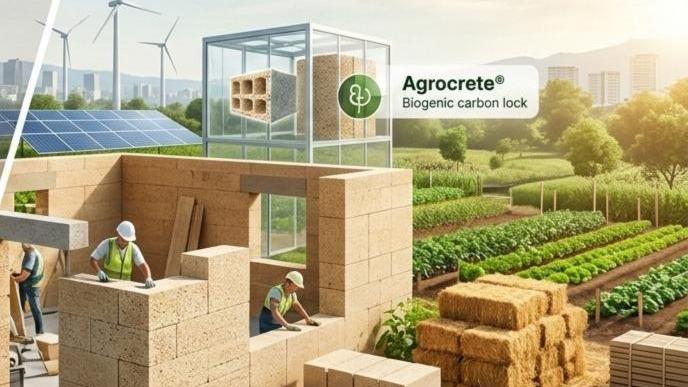
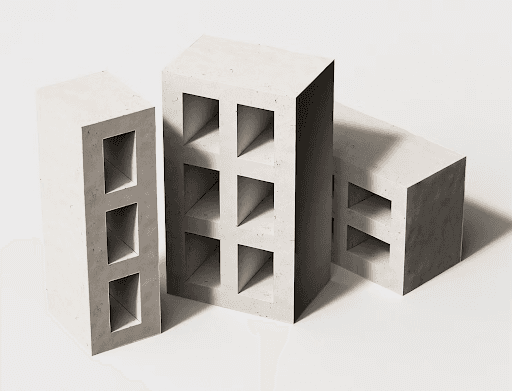
Agrocrete® is a carbon-negative building block made from upcycled crop residues and industrial by-products. It’s stronger, lighter, cooler, and more durable than conventional bricks, while also reducing environmental impact.

What does ‘carbon-negative’ mean?

How is Agrocrete® better than regular bricks?

Is Agrocrete® certified?

Where can it be used?

Is it termite-resistant and fire-resistant?

Will it change my construction process?

What’s its environmental impact?

Frequently asked questions

Have Questions?

We’ve Got Answers.

What is Agrocrete®?

Agrocrete® is a carbon-negative building block made from upcycled crop residues and industrial by-products. It’s stronger, lighter, cooler, and more durable than conventional bricks, while also reducing environmental impact.

What does ‘carbon-negative’ mean?

How is Agrocrete® better than regular bricks?

Is Agrocrete® certified?

Where can it be used?

Is it termite-resistant and fire-resistant?

Will it change my construction process?

What’s its environmental impact?

Frequently asked questions

Have Questions?

We’ve Got Answers.

What is Agrocrete®?

Agrocrete® is a carbon-negative building block made from upcycled crop residues and industrial by-products. It’s stronger, lighter, cooler, and more durable than conventional bricks, while also reducing environmental impact.

What does ‘carbon-negative’ mean?

How is Agrocrete® better than regular bricks?

Is Agrocrete® certified?

Where can it be used?

Is it termite-resistant and fire-resistant?

Will it change my construction process?

What’s its environmental impact?