Indigenous Construction and Sustainability in India

[We write this short article as a tribute to Architect Revathi Kamath (1955 - 2020), the pioneer of mud architecture in India. We lack words to describe the loss of this stalwart who along with her late husband, Vasant Kamath, hosted our young founders with love and guided our innovations as gurus. Here’s a beautifully penned obituary on worldarchitecture.org which covers some of her works.]

Todays’ building materials and construction techniques have come a long way to suit industrialization, growing populations and market demand. However, materials and practices have, over time, become more synthetic, than sustainable, and directly emit about 40% of the global carbon emissions!

Whether it’s the lack of sleep, the YouTube algorithm or just curiosity, many of us have come across the videos featuring primitive construction in the wilderness with no modern tools or technology. While it overwhelms us with methods and end results, an interesting perspective from the lens of climate impact is often overlooked in such in content. ThisInternational Day of the World’s Indigenous Peoples, we cover some indigenous construction projects and practices from India to highlight material and process innovations that today's built environment could learn from.

Like our diverse history that has panned various centuries, our built heritage too has fragmented to different regions to best suit the geographical challenges. Using locally available materials and understanding various aspects like temperature variations, structural requirements, security concerns, ventilation, water harvesting and even natural calamities, many constructions have remained sustainable while withstanding the test of time. Here are some indigenous examples from around the country:

Friday, December 12, 2025

Written By:

GreenJams

8 min

Tags:

Sustainability
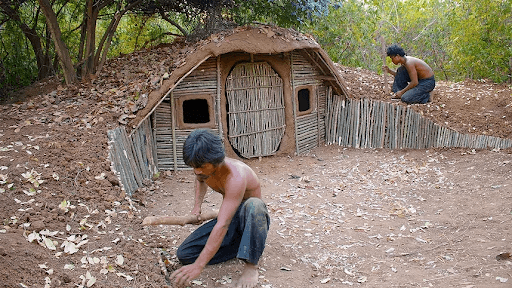
Indus Valley Civilization (3300 BCE to 1300 BCE)

Mud and Baked Mud-Blocks,

In the last couple of decades, as archaeologists began to unearth the remains of artefacts and structures around the ancient cities of Mohenjo-Daro and Harappa, the large cities of this civilization and their innovation in materials and techniques became apparent. With a peak population of about 5 million people, urban centers had a mix of residential and commercial establishments made of baked mud blocks, mud and gypsum for mortar and plastering, and went upto 1 – 2 stories in height, while rural homes were primarily made of mud. Town planning was carried out meticulously with the usage of grid layouts, drainage systems and even appropriate walling around the exterior of towns to prevent flooding from the adjacent rivers.

While in the current day, the civilization ceases to exist, their constructions have long outlived the expected durations of such building materials and continue to leave us in awe of their scientific and technical advancements.
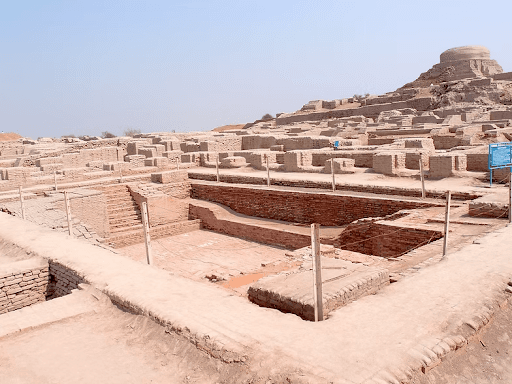
Mawlynnong Village, Meghalaya

Construction using Nature,

Diving about 2 hours south of Shillong will bring you to the cleanest village in Asia, Mawlynnong. Inhabited by about 100 families belonging to the Khasi tribes, these worshippers of nature have unique ways of constructing their built environments.

Using the aerial roots of rubber (Ficus Elastica), they control the growth of these trees to form living root bridges. Though this human-nature interplay can take about 10-15 years to execute, the trees intertwine, grow stronger with time and can last upto 500 years!

Residents of Mawlynnong construct their own homes using bamboo and prop these structures on bamboo stilts to save them from the severe monsoons in the region. Their lifestyle, their consumption and their construction together make their impact climate positive and these philosophies and techniques is taught to children from a very early age.
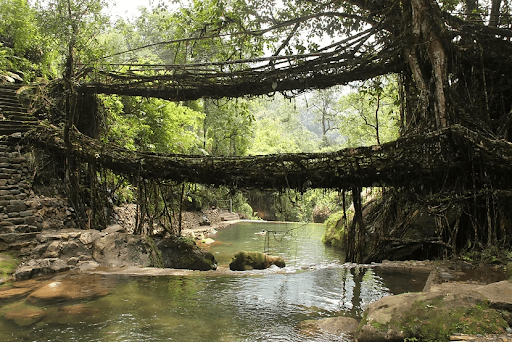
North East India

Timber, Bamboo and Thach,

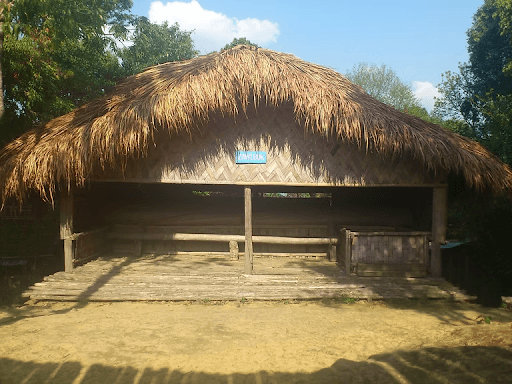
Buildings of north-east India are constructed over varying topographies ranging from plains, to mountains and frequently flooding regions, all while having to withstand severe temperature variations.

Timber which forms an internal skeleton for the building and is placed along with bamboo for load bearing. Other ingredients which fill in are mud, cow-dung and mortar made with pounded paddy. These traditional materials are simple, easily available, light-weight, strong, thermally insulating and leave a long-lasting climate positive footprint. Thought is also put into design based on the direction of winds and the placement of the fireplace to optimise their ability to control internal temperatures.
Rajasthan

Vernacular Architecture,

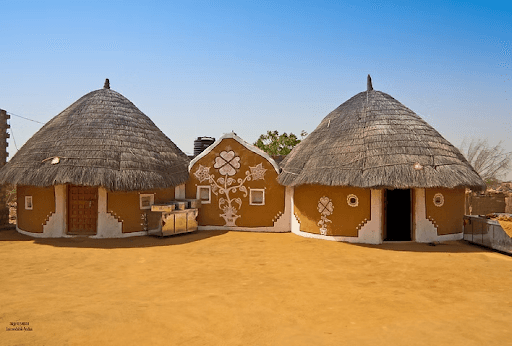
While modern construction has percolated into parts of rural India, a major challenge for end users is cost and sustainability due to un-planned modern construction and the lack of technical know-how. Despite traditional mud and thatched constructions being better suited for the desert dwellers, recent natural calamities like flash floods and earthquakes wiped out large parts of kuccha constructions in Rajasthan.

Hunnarshala, an organization that assisted the redevelopment of affected regions took an interesting approach to this problem by merging traditional knowledge of design with modern material technologies. They embarked on this endeavor by connecting with local builders and artisans from whom they studied design and with whom they re-built structurally sound homes, while keeping costs in check.
Himachal Pradesh

Kath-Khuni / Kath-Kuni Construction,

This form of traditional architecture, found in mountainous states of Himachal Pradesh and Uttarakhand, using long interlocking layers of think wooden logs and stone masonry, usually without using any mortar. Such construction which has been passed down through generations for centuries doesn’t overlook aspects of terrain, temperature, tradition, ecology or even potential seismic activity.

Granite is used in the foundation and walls, which are about 2 feet thick, are made of igneous rocks / stone and wood from deodar trees which are placed one-on-top of the other. Slate is used for roofing to allow sufficient waterproofing and to withstand the weight of snowfall during winters. Though modern construction has made it’s way into the mountains today, there are still many kath-khuni structures that still stand and highlight the benefits of such sustainable architectural traditions.

Conclusion

We hope this brief listicle motivates our readers to not just explore sustainable offerings by us at GreenJams, but go beyond, learn from the past, and continue to mould our built environment into a climate positive one!

👉 Stay tuned for more updates on how GreenJams is transforming the built environment, one carbon-negative block at a time.
Suggested Blogs

Dec 12, 2025

4 min

Heatwaves and Mivan Construction

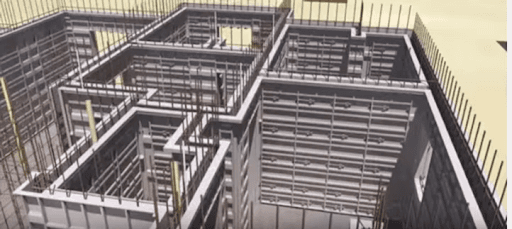
‘Mivan Shuttering’ has been a godsend for the construction industry. That’s because Mivan technology enables extremely rapid construction, improves durability and earthquake resistance, and reduces wall thickness and increases carpet area in high rise buildings.

The Mivan construction technology essentially comprises a highly durable aluminium formwork fabricated in the shape and layout of the building including the walls, columns, beams, and slabs. It is extremely modular and uses the same formwork for all the floors of the building. The steel reinforcement is fixed within the formwork and concrete is poured into it to make the different members of the building.

Tags:

Technology

Dec 12, 2025

5 min

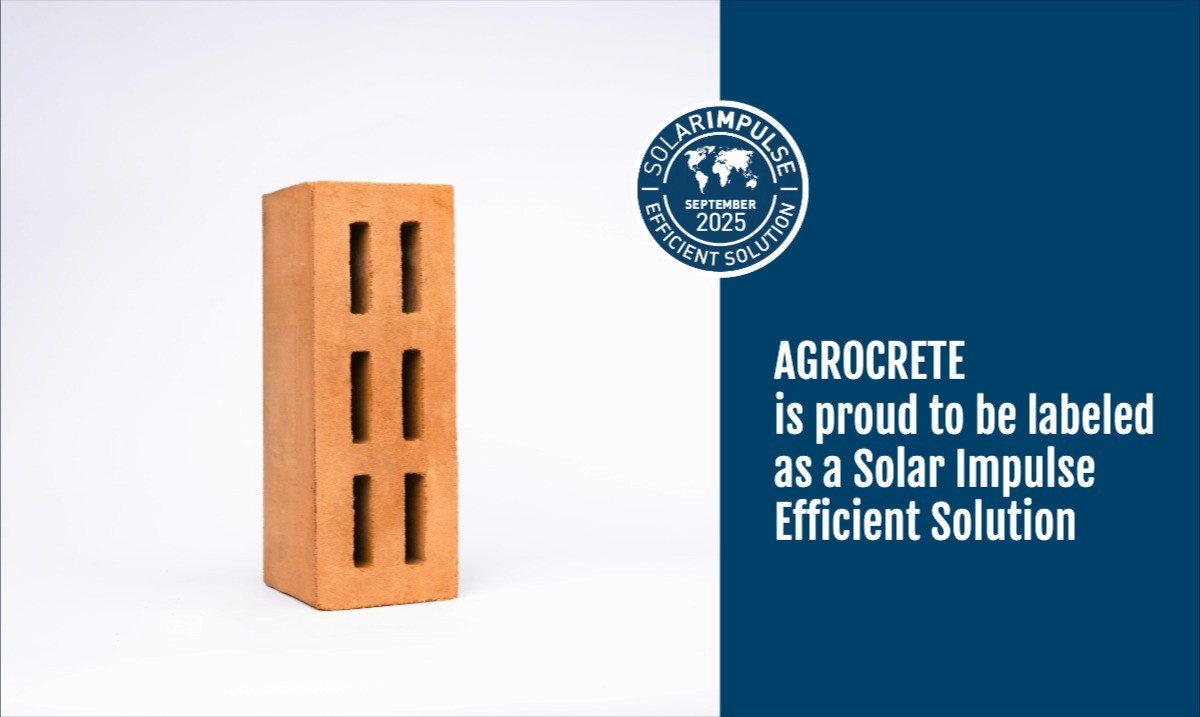
Agrocrete®: A weapon for the war against climate change

It was never an argument - climate change is real, and it demands urgent action. As per the IPCC 2018 Special Report on Global Warming of 1.5°C, it is estimated that by 2050, if the world isn’t fully carbon neutral, then global temperatures could increase by much more than 1.5C. However, as per Piers Froster, one of the lead authors of the landmark paper, there is still hope. He stated, “If the world can substantially reduce emissions in the 2020s and get to net zero carbon emissions by 2050, temperature rise can still be limited to 1.5C”.

This begs the question - how can we overturn climate change quickly and effectively? The surest way forward is geoengineering, which is essentially a way for human beings to manage the earth’s climate in deliberate ways. An effective, low cost way of geoengineering is to devise methods of Carbon Dioxide Removal, or CDR. Activities such as afforestation and reforestation are popular methods of CDR, however, given the time scale it takes to cause real impact, it isn’t a practical method despite its obvious benefits.

It is for this reason that more and more scientific and institutional efforts are directed towards creating ways of achieving CDR in a highly effective and relatively low-cost manner.

Tags:

product

Dec 12, 2025

3 min

Are AAC blocks really green?

No, they're grey. Cheeky jokes apart, they aren't as "green" as they're purported to be. But why, and how?

Tags:

Sustainability

Dec 12, 2025

2 min

AAC Blocks: An accidental invention!

AAC Blocks (Autoclaved Aerated Concrete Blocks) are some of the most consumed building materials in the world. It currently offers one of the best value propositions in terms of cost of construction and technical performance. The manufacturing capacity in India is capable of producing approx. ₹15,000 crores worth blocks, annually. But the history of AAC blocks is fascinating – to begin with, it was an accidental invention!

Tags:

product

Dec 12, 2025

3 min

4 Principles of Cost Estimation

Cost estimation in project management is the process of forecasting the cost and other resources needed to complete a project within a defined scope. Cost estimation accounts for each element required for the project and calculates a total amount that determines a project's budget.

Tags:

Sustainability

Dec 12, 2025

6 min

Misconstrued Sustainability

Sustainable is defined as, “(the) avoidance of the depletion of natural resources in order to maintain an ecological balance” and gained traction as a concept only after the 1970s US oil crisis[1]. Though the reducing oil supply harboured a need to conserve oil and use it more efficiently, the focus of solutions were more on attaining ‘economic benefits’ for stakeholders instead of achieving an ‘ecological balance’. From the 1970s to now, the world has undergone a lot of industrial growth and the factors affecting the environment have continuously increased in number. With rising sea levels and deteriorating air quality world over, positive climate action is the need of the hour, but efforts towards sustainability still seems to be lost.

Tags:

Sustainability

Dec 12, 2025

8 min

Indigenous Construction and Sustainability in India

[We write this short article as a tribute to Architect Revathi Kamath (1955 - 2020), the pioneer of mud architecture in India. We lack words to describe the loss of this stalwart who along with her late husband, Vasant Kamath, hosted our young founders with love and guided our innovations as gurus. Here’s a beautifully penned obituary on worldarchitecture.org which covers some of her works.]

Todays’ building materials and construction techniques have come a long way to suit industrialization, growing populations and market demand. However, materials and practices have, over time, become more synthetic, than sustainable, and directly emit about 40% of the global carbon emissions!

Whether it’s the lack of sleep, the YouTube algorithm or just curiosity, many of us have come across the videos featuring primitive construction in the wilderness with no modern tools or technology. While it overwhelms us with methods and end results, an interesting perspective from the lens of climate impact is often overlooked in such in content. ThisInternational Day of the World’s Indigenous Peoples, we cover some indigenous construction projects and practices from India to highlight material and process innovations that today's built environment could learn from.

Like our diverse history that has panned various centuries, our built heritage too has fragmented to different regions to best suit the geographical challenges. Using locally available materials and understanding various aspects like temperature variations, structural requirements, security concerns, ventilation, water harvesting and even natural calamities, many constructions have remained sustainable while withstanding the test of time. Here are some indigenous examples from around the country:

Tags:

Sustainability

Dec 12, 2025

5 min

5 Ways the Construction Industry Will Transform Due To COVID-19

The COVID-19 pandemic was unprecedented on many levels. Its impact on the world economy is yet unfathomed. The magnitude of the loss of lives and livelihoods to an epidemic is unparalleled. According to IMF, the "Great Lockdown" will have a much more significant impact than the "Great Depression" with global GDP growth falling below -3% in 2020. The advanced economies shall be the worst hit with a projected GDP growth of -6%, and the emerging economies shall be at a relatively alarming -1%. However, India and China may not enter a "de-growth" phase and expect to have a projected GDP growth of 1.9% and 1.2%, respectively, in 2020.

Consequently, the construction sector, which is the largest non-farm employment generator, will face pertinent challenges as a result of the novel coronavirus pandemic. While, in India, the construction sector was one of the first non-essential industries to receive an exemption from the lockdown, it will undoubtedly undergo a critical transformation.

Tags:

Sustainability

Suggested Blogs

Dec 12, 2025

4 min

Heatwaves and Mivan Construction

‘Mivan Shuttering’ has been a godsend for the construction industry. That’s because Mivan technology enables extremely rapid construction, improves durability and earthquake resistance, and reduces wall thickness and increases carpet area in high rise buildings.

The Mivan construction technology essentially comprises a highly durable aluminium formwork fabricated in the shape and layout of the building including the walls, columns, beams, and slabs. It is extremely modular and uses the same formwork for all the floors of the building. The steel reinforcement is fixed within the formwork and concrete is poured into it to make the different members of the building.

Tags:

Technology

Dec 12, 2025

5 min

Agrocrete®: A weapon for the war against climate change

It was never an argument - climate change is real, and it demands urgent action. As per the IPCC 2018 Special Report on Global Warming of 1.5°C, it is estimated that by 2050, if the world isn’t fully carbon neutral, then global temperatures could increase by much more than 1.5C. However, as per Piers Froster, one of the lead authors of the landmark paper, there is still hope. He stated, “If the world can substantially reduce emissions in the 2020s and get to net zero carbon emissions by 2050, temperature rise can still be limited to 1.5C”.

This begs the question - how can we overturn climate change quickly and effectively? The surest way forward is geoengineering, which is essentially a way for human beings to manage the earth’s climate in deliberate ways. An effective, low cost way of geoengineering is to devise methods of Carbon Dioxide Removal, or CDR. Activities such as afforestation and reforestation are popular methods of CDR, however, given the time scale it takes to cause real impact, it isn’t a practical method despite its obvious benefits.

It is for this reason that more and more scientific and institutional efforts are directed towards creating ways of achieving CDR in a highly effective and relatively low-cost manner.

Tags:

product

Dec 12, 2025

3 min

Are AAC blocks really green?

No, they're grey. Cheeky jokes apart, they aren't as "green" as they're purported to be. But why, and how?

Tags:

Sustainability

Dec 12, 2025

2 min

AAC Blocks: An accidental invention!

AAC Blocks (Autoclaved Aerated Concrete Blocks) are some of the most consumed building materials in the world. It currently offers one of the best value propositions in terms of cost of construction and technical performance. The manufacturing capacity in India is capable of producing approx. ₹15,000 crores worth blocks, annually. But the history of AAC blocks is fascinating – to begin with, it was an accidental invention!

Tags:

product

Dec 12, 2025

3 min

4 Principles of Cost Estimation

Cost estimation in project management is the process of forecasting the cost and other resources needed to complete a project within a defined scope. Cost estimation accounts for each element required for the project and calculates a total amount that determines a project's budget.

Tags:

Sustainability

Dec 12, 2025

6 min

Misconstrued Sustainability

Sustainable is defined as, “(the) avoidance of the depletion of natural resources in order to maintain an ecological balance” and gained traction as a concept only after the 1970s US oil crisis[1]. Though the reducing oil supply harboured a need to conserve oil and use it more efficiently, the focus of solutions were more on attaining ‘economic benefits’ for stakeholders instead of achieving an ‘ecological balance’. From the 1970s to now, the world has undergone a lot of industrial growth and the factors affecting the environment have continuously increased in number. With rising sea levels and deteriorating air quality world over, positive climate action is the need of the hour, but efforts towards sustainability still seems to be lost.

Tags:

Sustainability

Dec 12, 2025

8 min

Indigenous Construction and Sustainability in India

[We write this short article as a tribute to Architect Revathi Kamath (1955 - 2020), the pioneer of mud architecture in India. We lack words to describe the loss of this stalwart who along with her late husband, Vasant Kamath, hosted our young founders with love and guided our innovations as gurus. Here’s a beautifully penned obituary on worldarchitecture.org which covers some of her works.]

Todays’ building materials and construction techniques have come a long way to suit industrialization, growing populations and market demand. However, materials and practices have, over time, become more synthetic, than sustainable, and directly emit about 40% of the global carbon emissions!

Whether it’s the lack of sleep, the YouTube algorithm or just curiosity, many of us have come across the videos featuring primitive construction in the wilderness with no modern tools or technology. While it overwhelms us with methods and end results, an interesting perspective from the lens of climate impact is often overlooked in such in content. ThisInternational Day of the World’s Indigenous Peoples, we cover some indigenous construction projects and practices from India to highlight material and process innovations that today's built environment could learn from.

Like our diverse history that has panned various centuries, our built heritage too has fragmented to different regions to best suit the geographical challenges. Using locally available materials and understanding various aspects like temperature variations, structural requirements, security concerns, ventilation, water harvesting and even natural calamities, many constructions have remained sustainable while withstanding the test of time. Here are some indigenous examples from around the country:

Tags:

Sustainability

Dec 12, 2025

5 min

5 Ways the Construction Industry Will Transform Due To COVID-19

The COVID-19 pandemic was unprecedented on many levels. Its impact on the world economy is yet unfathomed. The magnitude of the loss of lives and livelihoods to an epidemic is unparalleled. According to IMF, the "Great Lockdown" will have a much more significant impact than the "Great Depression" with global GDP growth falling below -3% in 2020. The advanced economies shall be the worst hit with a projected GDP growth of -6%, and the emerging economies shall be at a relatively alarming -1%. However, India and China may not enter a "de-growth" phase and expect to have a projected GDP growth of 1.9% and 1.2%, respectively, in 2020.

Consequently, the construction sector, which is the largest non-farm employment generator, will face pertinent challenges as a result of the novel coronavirus pandemic. While, in India, the construction sector was one of the first non-essential industries to receive an exemption from the lockdown, it will undoubtedly undergo a critical transformation.

Tags:

Sustainability

Suggested Blogs

Dec 12, 2025

4 min

Heatwaves and Mivan Construction

‘Mivan Shuttering’ has been a godsend for the construction industry. That’s because Mivan technology enables extremely rapid construction, improves durability and earthquake resistance, and reduces wall thickness and increases carpet area in high rise buildings.

The Mivan construction technology essentially comprises a highly durable aluminium formwork fabricated in the shape and layout of the building including the walls, columns, beams, and slabs. It is extremely modular and uses the same formwork for all the floors of the building. The steel reinforcement is fixed within the formwork and concrete is poured into it to make the different members of the building.

Tags:

Technology

Dec 12, 2025

5 min

Agrocrete®: A weapon for the war against climate change

It was never an argument - climate change is real, and it demands urgent action. As per the IPCC 2018 Special Report on Global Warming of 1.5°C, it is estimated that by 2050, if the world isn’t fully carbon neutral, then global temperatures could increase by much more than 1.5C. However, as per Piers Froster, one of the lead authors of the landmark paper, there is still hope. He stated, “If the world can substantially reduce emissions in the 2020s and get to net zero carbon emissions by 2050, temperature rise can still be limited to 1.5C”.

This begs the question - how can we overturn climate change quickly and effectively? The surest way forward is geoengineering, which is essentially a way for human beings to manage the earth’s climate in deliberate ways. An effective, low cost way of geoengineering is to devise methods of Carbon Dioxide Removal, or CDR. Activities such as afforestation and reforestation are popular methods of CDR, however, given the time scale it takes to cause real impact, it isn’t a practical method despite its obvious benefits.

It is for this reason that more and more scientific and institutional efforts are directed towards creating ways of achieving CDR in a highly effective and relatively low-cost manner.

Tags:

product

Dec 12, 2025

3 min

Are AAC blocks really green?

No, they're grey. Cheeky jokes apart, they aren't as "green" as they're purported to be. But why, and how?

Tags:

Sustainability

Dec 12, 2025

2 min

AAC Blocks: An accidental invention!

AAC Blocks (Autoclaved Aerated Concrete Blocks) are some of the most consumed building materials in the world. It currently offers one of the best value propositions in terms of cost of construction and technical performance. The manufacturing capacity in India is capable of producing approx. ₹15,000 crores worth blocks, annually. But the history of AAC blocks is fascinating – to begin with, it was an accidental invention!

Tags:

product

Dec 12, 2025

3 min

4 Principles of Cost Estimation

Cost estimation in project management is the process of forecasting the cost and other resources needed to complete a project within a defined scope. Cost estimation accounts for each element required for the project and calculates a total amount that determines a project's budget.

Tags:

Sustainability

Dec 12, 2025

6 min

Misconstrued Sustainability

Sustainable is defined as, “(the) avoidance of the depletion of natural resources in order to maintain an ecological balance” and gained traction as a concept only after the 1970s US oil crisis[1]. Though the reducing oil supply harboured a need to conserve oil and use it more efficiently, the focus of solutions were more on attaining ‘economic benefits’ for stakeholders instead of achieving an ‘ecological balance’. From the 1970s to now, the world has undergone a lot of industrial growth and the factors affecting the environment have continuously increased in number. With rising sea levels and deteriorating air quality world over, positive climate action is the need of the hour, but efforts towards sustainability still seems to be lost.

Tags:

Sustainability

Frequently asked questions

Have Questions?

We’ve Got Answers.

What is Agrocrete®?

Agrocrete® is a carbon-negative building block made from upcycled crop residues and industrial by-products. It’s stronger, lighter, cooler, and more durable than conventional bricks, while also reducing environmental impact.

What does ‘carbon-negative’ mean?

How is Agrocrete® better than regular bricks?

Is Agrocrete® certified?

Where can it be used?

Is it termite-resistant and fire-resistant?

Will it change my construction process?

What’s its environmental impact?

Frequently asked questions

Have Questions?

We’ve Got Answers.

What is Agrocrete®?

Agrocrete® is a carbon-negative building block made from upcycled crop residues and industrial by-products. It’s stronger, lighter, cooler, and more durable than conventional bricks, while also reducing environmental impact.

What does ‘carbon-negative’ mean?

How is Agrocrete® better than regular bricks?

Is Agrocrete® certified?

Where can it be used?

Is it termite-resistant and fire-resistant?

Will it change my construction process?

What’s its environmental impact?

Frequently asked questions

Have Questions?

We’ve Got Answers.

What is Agrocrete®?

Agrocrete® is a carbon-negative building block made from upcycled crop residues and industrial by-products. It’s stronger, lighter, cooler, and more durable than conventional bricks, while also reducing environmental impact.

What does ‘carbon-negative’ mean?

How is Agrocrete® better than regular bricks?

Is Agrocrete® certified?

Where can it be used?

Is it termite-resistant and fire-resistant?

Will it change my construction process?

What’s its environmental impact?