World’s First Verified Carbon-Negative Construction Block

Visakhapatnam-based company becomes world’s first construction materials startup to publish a third-party verified EPD proving its carbon-negative claim on the International EPD System.

Written By:

GreenJams

4 min

Tags:

Press & Media

Sustainable Construction Materials

A landmark for the construction industry

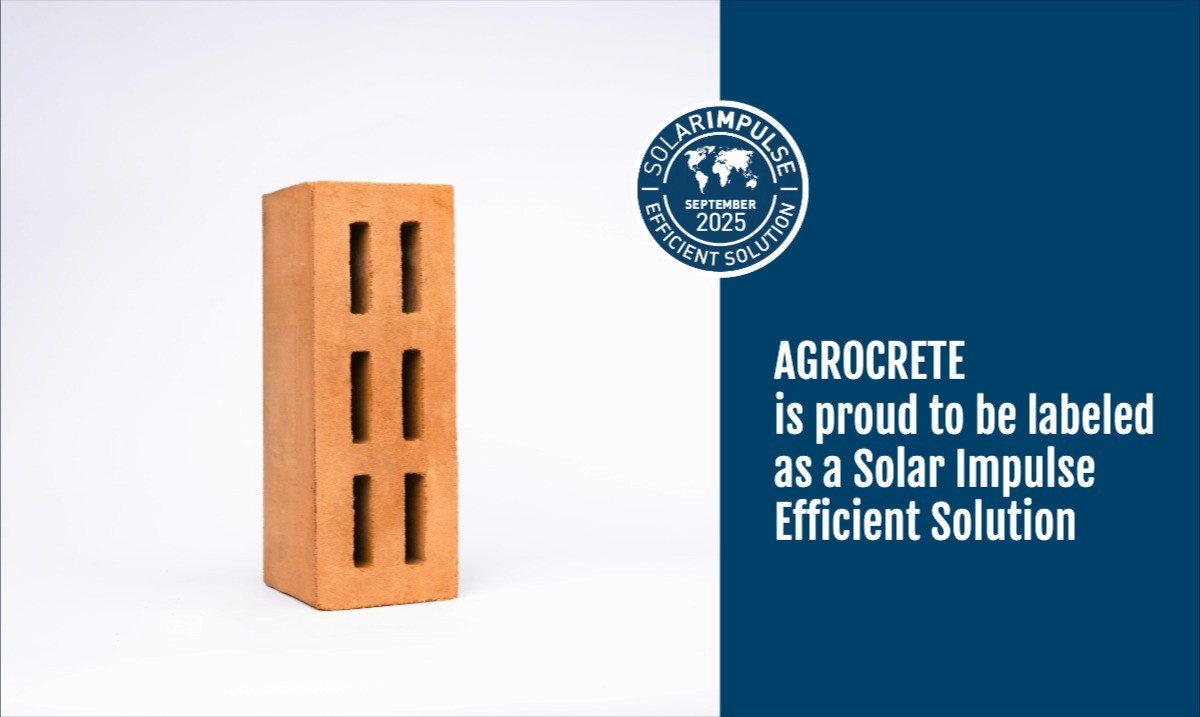
GreenJams creates history by becoming the first Indian construction materials startup to publish an Environmental Product Declaration (EPD) for its flagship innovation Agrocrete®. Through this stringent and transparent third-party verified process, the company has proven that Agrocrete® is truly carbon-negative. Download the EPD here.

“This is a landmark for the global and Indian construction industry! For the first time the industry has access to a verified-carbon-negative building block. Through Agrocrete® we have now unlocked a new massively scalable and ultra low cost method for carbon capture while creating value for our all-important beneficiaries, the farmers. The possibilities are massive – with the 900 million cu.m. of potential annual Agrocrete® production we can capture at least 100 million tonnes of CO2 and prevent 350 million tonnes of CO2 emissions. This year ITC Ltd alone had captured 38.5 tonnes of CO2 and avoided 144 tonnes of CO2 emissions by using Agrocrete® at its project at Kapurthala” — Tarun Jami, Founder & CEO, GreenJams

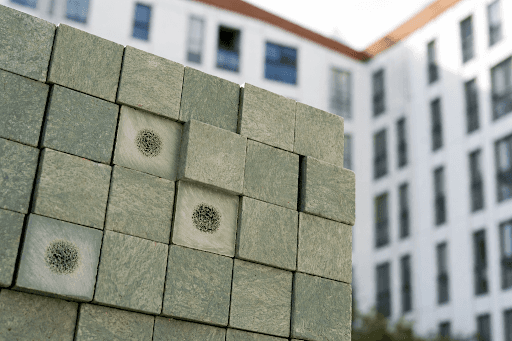
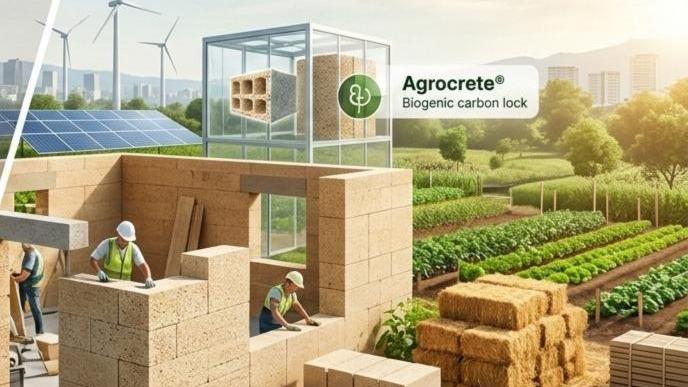
The third-party verified EPD published for Agrocrete® shows that it is carbon-negative right from the start. This is on account of the biogenic carbon being stored in the crop residues used to produce Agrocrete®. The EPD shows that its embodied carbon is -0.14 kg CO2/kg, meaning each metric tonne of Agrocrete® captures 140 kilograms of carbon dioxide within itself. Even upon its end of life, the carbon dioxide captured within Agrocrete® does not escape into the atmosphere, thus retaining its carbon-negative properties virtually forever. In addition, the manufacturing process does not cause any emissions and is based entirely on low voltage electricity. GreenJams plans to shift to completely renewable energy soon.

Why an EPD matters

“More often than not, products claim sustainability based on intuitions and intentions. As a carbon analyst for buildings, this means choosing building materials from companies throwing around words like “low carbon footprints”, “carbon neutrality”, and “green label”. There are endless ways of manipulating these claims. However, an Environmental Product Declaration (EPD) is the only ecolabel we trust without skepticism. It is exciting to see Agrocrete’s EPD prove GreenJams’s claims with a cradle-to-gate (A1-A3) GWP of -0.14 kgCO2e/kg. It confirms its status as a carbon-negative block and allows carbon storage even after the end of life.” — Mili Jain, Founder, Monk Spaces

In India, EPDs are published only by large enterprises and MNCs, perhaps as an ESG compliance obligation. Therefore, Visakhapatnam-headquartered GreenJams is immensely proud to be the only construction materials startup to publish an EPD and prove its next-generation sustainability ethos. For the many practitioners who design buildings with sustainability goals, there are very few products with accurate information about their environmental impacts. With this EPD, GreenJams is able to deliver transparency and the data necessary to build better buildings.

A sample Agrocrete® block can be ordered from here.

How the EPD was prepared

The EPD was prepared by Monk Spaces, a New-Delhi based carbon consulting firm founded by Mili Jain. It is prepared following a stringent 5-stage process established by the International EPD System and its technical committee. It begins with selecting the most relevant Product Category Rules (PCR), and carrying out an LCA using a methodology prescribed by the technical committee. The LCA is then transferred to a pre-approved EPD format conforming to the ISO 14025 and EN 15804 standards. The EPD is then reviewed and verified by an independent empaneled verifier with knowledge of the type of products. Finally, the declarer registers the EPD on an EPD portal along with the required documentation. It is valid for five years.

This EPD was prepared and published with support from Terwilliger Center for Innovation in Shelter – Habitat for Humanity and Villgro Innovations Foundation, under the ShelterTech & Housing Accelerator Program, to make housing markets environmentally sustainable and inclusive in India.

About GreenJams

GreenJams is bringing high-quality, thermally insulating and carbon-negative building materials to the market, helping the construction industry lower its carbon footprint, save costs, and benefit socio-economically marginalized communities. Backed by almost half a decade of research and technological innovation, GreenJams is changing how building materials are manufactured and reversing climate change. Today, they’re paving the way for the future built environment to become carbon-neutral and solving the acutely impacted public health through the prevention of crop residue burning. Recognizing their impact, GreenJams was listed on Forbes Asia’s ‘30 Under 30’. They are supported by the Ministry of Housing & Urban Affairs, Ministry of Science and Technology, Ministry of Agriculture and Farmers’ Welfare, and Agence Française de Développement. GreenJams is also supported by TCIS-Habitat for Humanity, Villgro Innovations Foundation, Punjab Agri-Business Incubator and a-IDEA NAARM. The company is headquartered at Visakhapatnam, Andhra Pradesh, India. Learn more at www.greenjams.org, and follow on Facebook, Instagram and LinkedIn.

👉 Stay tuned for more updates on how GreenJams is transforming the built environment, one carbon-negative block at a time.

Suggested Blogs

Sustainable Construction Materials

2 min

Sustainable Construction Materials: The Turning Point in Climate-Positive Building

Tags:

Sustainability

Climate-Positive Infrastructure

3 min

Climate-Positive Infrastructure vs Net Zero Explained

Tags:

Technology

The Circular Mandate

3 min

The Circular Mandate: Circular Construction Future

Tags:

Sustainability

Embodied Carbon in Construction

3 min

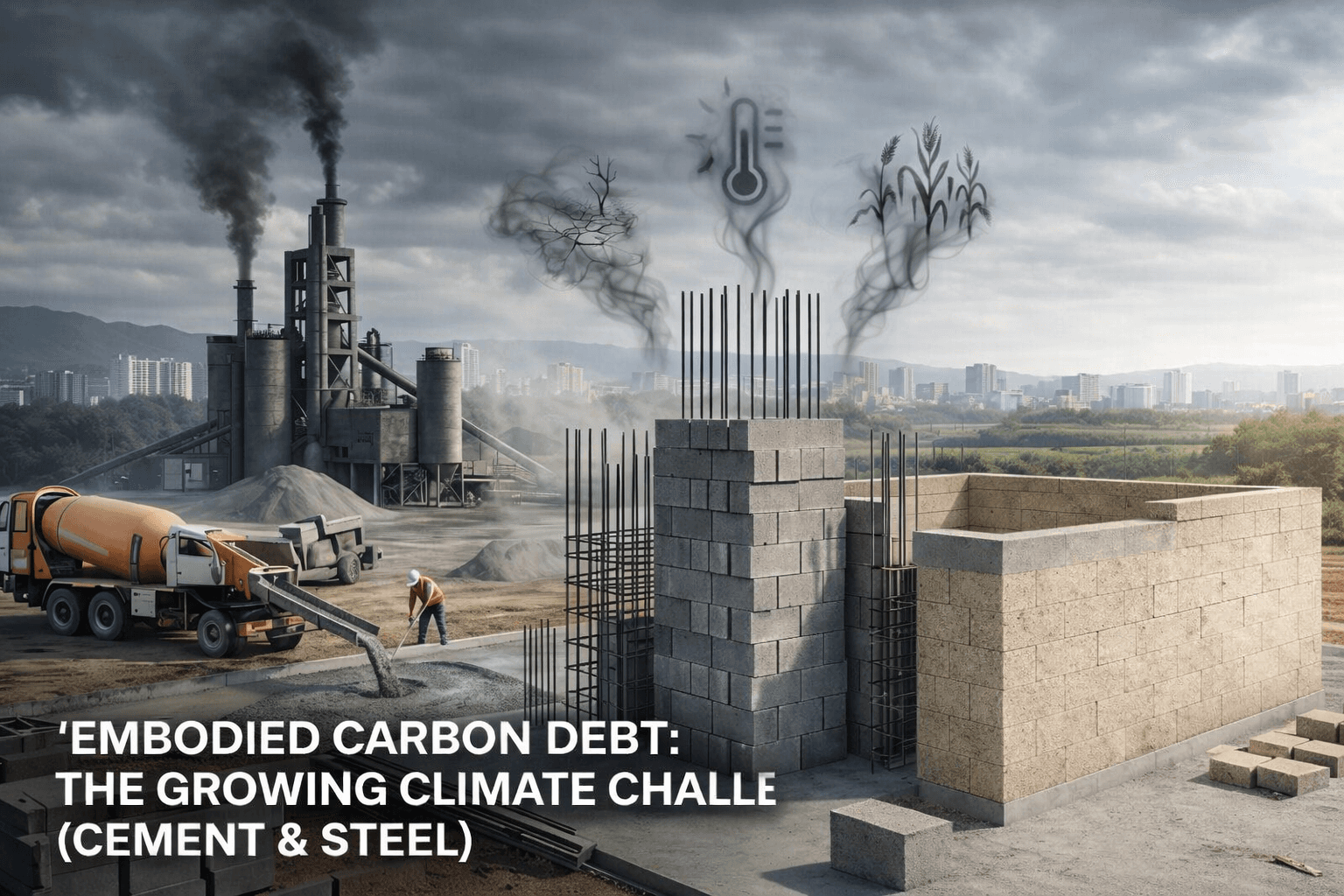
Embodied Carbon in Construction: The Climate Debt Explained

Tags:

Carbon Capture

Climate-Positive Construction

2 min

Climate-Positive Construction: The Carbon Counter-Attack

Tags:

Carbon Capture

GreenJams’ Agrocrete® Becomes India’s Only Carbon-Negative Building Material to Earn the Prestigious Solar Impulse Efficient Solution Label

2 min

GreenJams’ Agrocrete® Becomes India’s Only Carbon-Negative Building Material to Earn the Prestigious Solar Impulse Efficient Solution Label

FOR IMMEDIATE RELEASE

Tags:

Press & Media

4 min

Heatwaves and Mivan Construction

‘Mivan Shuttering’ has been a godsend for the construction industry. That’s because Mivan technology enables extremely rapid construction, improves durability and earthquake resistance, and reduces wall thickness and increases carpet area in high rise buildings.

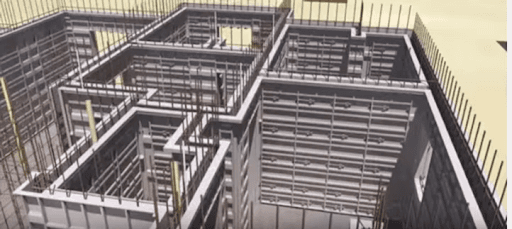
The Mivan construction technology essentially comprises a highly durable aluminium formwork fabricated in the shape and layout of the building including the walls, columns, beams, and slabs. It is extremely modular and uses the same formwork for all the floors of the building. The steel reinforcement is fixed within the formwork and concrete is poured into it to make the different members of the building.

Tags:

Technology

5 min

Agrocrete®: A weapon for the war against climate change

It was never an argument - climate change is real, and it demands urgent action. As per the IPCC 2018 Special Report on Global Warming of 1.5°C, it is estimated that by 2050, if the world isn’t fully carbon neutral, then global temperatures could increase by much more than 1.5C. However, as per Piers Froster, one of the lead authors of the landmark paper, there is still hope. He stated, “If the world can substantially reduce emissions in the 2020s and get to net zero carbon emissions by 2050, temperature rise can still be limited to 1.5C”.

This begs the question - how can we overturn climate change quickly and effectively? The surest way forward is geoengineering, which is essentially a way for human beings to manage the earth’s climate in deliberate ways. An effective, low cost way of geoengineering is to devise methods of Carbon Dioxide Removal, or CDR. Activities such as afforestation and reforestation are popular methods of CDR, however, given the time scale it takes to cause real impact, it isn’t a practical method despite its obvious benefits.

It is for this reason that more and more scientific and institutional efforts are directed towards creating ways of achieving CDR in a highly effective and relatively low-cost manner.

Tags:

product

Suggested Blogs

Sustainable Construction Materials

2 min

Sustainable Construction Materials: The Turning Point in Climate-Positive Building

Tags:

Sustainability

Climate-Positive Infrastructure

3 min

Climate-Positive Infrastructure vs Net Zero Explained

Tags:

Technology

The Circular Mandate

3 min

The Circular Mandate: Circular Construction Future

Tags:

Sustainability

Embodied Carbon in Construction

3 min

Embodied Carbon in Construction: The Climate Debt Explained

Tags:

Carbon Capture

Climate-Positive Construction

2 min

Climate-Positive Construction: The Carbon Counter-Attack

Tags:

Carbon Capture

GreenJams’ Agrocrete® Becomes India’s Only Carbon-Negative Building Material to Earn the Prestigious Solar Impulse Efficient Solution Label

2 min

GreenJams’ Agrocrete® Becomes India’s Only Carbon-Negative Building Material to Earn the Prestigious Solar Impulse Efficient Solution Label

FOR IMMEDIATE RELEASE

Tags:

Press & Media

4 min

Heatwaves and Mivan Construction

‘Mivan Shuttering’ has been a godsend for the construction industry. That’s because Mivan technology enables extremely rapid construction, improves durability and earthquake resistance, and reduces wall thickness and increases carpet area in high rise buildings.

The Mivan construction technology essentially comprises a highly durable aluminium formwork fabricated in the shape and layout of the building including the walls, columns, beams, and slabs. It is extremely modular and uses the same formwork for all the floors of the building. The steel reinforcement is fixed within the formwork and concrete is poured into it to make the different members of the building.

Tags:

Technology

5 min

Agrocrete®: A weapon for the war against climate change

It was never an argument - climate change is real, and it demands urgent action. As per the IPCC 2018 Special Report on Global Warming of 1.5°C, it is estimated that by 2050, if the world isn’t fully carbon neutral, then global temperatures could increase by much more than 1.5C. However, as per Piers Froster, one of the lead authors of the landmark paper, there is still hope. He stated, “If the world can substantially reduce emissions in the 2020s and get to net zero carbon emissions by 2050, temperature rise can still be limited to 1.5C”.

This begs the question - how can we overturn climate change quickly and effectively? The surest way forward is geoengineering, which is essentially a way for human beings to manage the earth’s climate in deliberate ways. An effective, low cost way of geoengineering is to devise methods of Carbon Dioxide Removal, or CDR. Activities such as afforestation and reforestation are popular methods of CDR, however, given the time scale it takes to cause real impact, it isn’t a practical method despite its obvious benefits.

It is for this reason that more and more scientific and institutional efforts are directed towards creating ways of achieving CDR in a highly effective and relatively low-cost manner.

Tags:

product

Frequently asked questions

Have Questions?

We’ve Got Answers.

What is Agrocrete®?

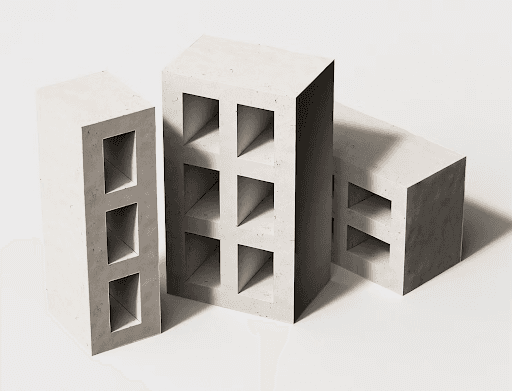
Agrocrete® is a carbon-negative building block made from upcycled crop residues and industrial by-products. It’s stronger, lighter, cooler, and more durable than conventional bricks, while also reducing environmental impact.

What does ‘carbon-negative’ mean?

How is Agrocrete® better than regular bricks?

Is Agrocrete® certified?

Where can it be used?

Is it termite-resistant and fire-resistant?

Will it change my construction process?

What’s its environmental impact?

Frequently asked questions

Have Questions?

We’ve Got Answers.

What is Agrocrete®?

Agrocrete® is a carbon-negative building block made from upcycled crop residues and industrial by-products. It’s stronger, lighter, cooler, and more durable than conventional bricks, while also reducing environmental impact.

What does ‘carbon-negative’ mean?

How is Agrocrete® better than regular bricks?

Is Agrocrete® certified?

Where can it be used?

Is it termite-resistant and fire-resistant?

Will it change my construction process?

What’s its environmental impact?

Frequently asked questions

Have Questions?

We’ve Got Answers.

What is Agrocrete®?

Agrocrete® is a carbon-negative building block made from upcycled crop residues and industrial by-products. It’s stronger, lighter, cooler, and more durable than conventional bricks, while also reducing environmental impact.

What does ‘carbon-negative’ mean?

How is Agrocrete® better than regular bricks?

Is Agrocrete® certified?

Where can it be used?

Is it termite-resistant and fire-resistant?

Will it change my construction process?

What’s its environmental impact?