Are AAC blocks really green? - My Framer Site

Are AAC blocks really green?

No, they're grey. Cheeky jokes apart, they aren't as "green" as they're purported to be. But why, and how?

Friday, December 12, 2025

Written By:

GreenJams

3 min

Tags:

Sustainability
GreenJams’ Agrocrete® Becomes India’s Only Carbon-Negative Building Material to Earn the Prestigious Solar Impulse Efficient Solution Label

A little background first...

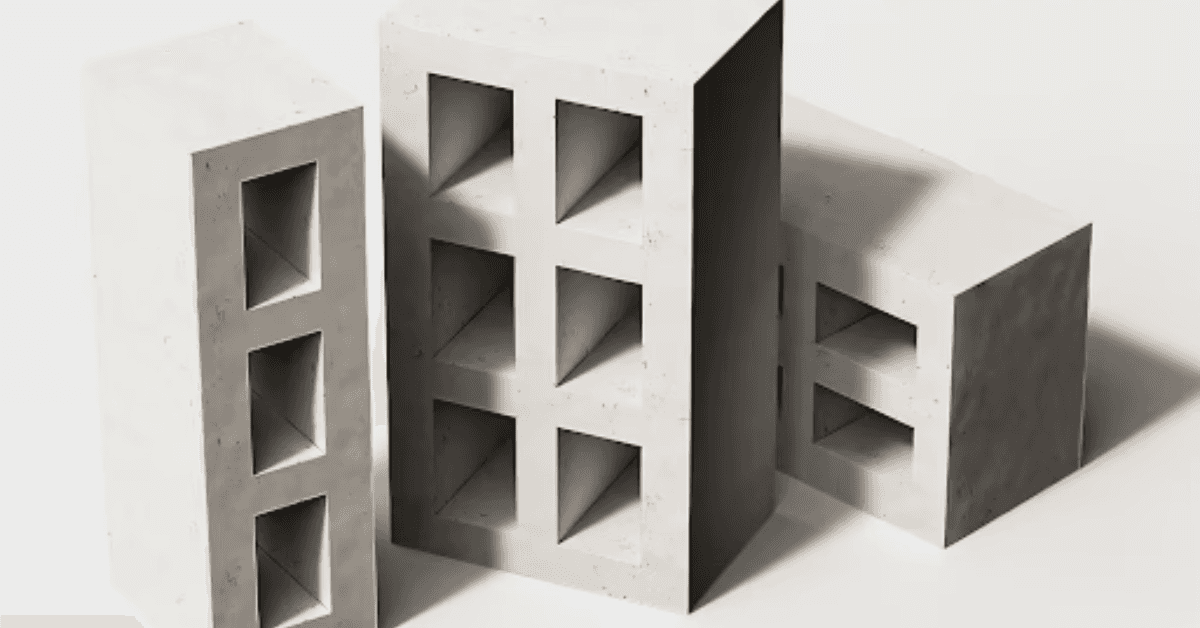
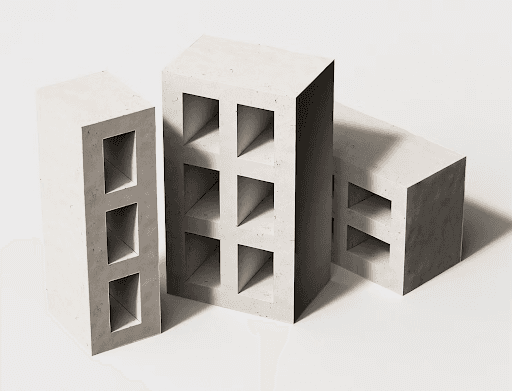
Autoclaved Aerated Concrete (AAC) blocks are the preferred choice of walling material for almost every real estate developer in the market today because they're cheap and enable faster construction. But they aren't easy to live with. We've learned about the lengths these guys scale to make it all work from our own first-hand encounters with the construction teams at project sites. The blocks are very porous and absorb huge amounts of water; the expansion and contraction are so much that they eventually crack; the plaster de-laminates after a few years of construction; and the structural integrity gets compromised if the chiselling for concealed conduits is not done accurately. Most importantly (I can't believe it has actually come down to this), you cannot hammer a nail into the block without shattering it. And to overcome all of these difficulties, builders end up installing RCC tie beams after every 4 rows of the block-work, use only power drills to fix nails, and so on. We have, in fact, heard many complaints about AAC blocks from the QA/QC teams of many major Indian real estate firms like L&T Realty, Shapoorji Pallonji, Mahindra, and so on.

Despite these troubles, most major developers still choose AAC blocks simply because of the lower cost. Adding to the mix, you'd find many manufacturers advertising AAC blocks as a "green" material, and quite a few green-rating systems even award additional points for the use of AAC blocks. Not without merit, though! They have a much higher thermal insulation than clay bricks and are extremely light, reducing the structure's dead load.

And do you know what's more astonishing? The embodied carbon of AAC blocks is 0.23 kg.CO2/kg, which is almost as much as the embodied carbon of clay bricks at 0.24 kg.CO2/kg.

But are these benefits enough to call it a "green" material?

Yes and no. You see, it's about the optics. What is your benchmark? If you're comparing AAC blocks with red bricks (burnt clay bricks), then they're much greener. But if you were to compare it with fly ash bricks, not so much. And fly ash bricks in some parts of our country (like Vizag) are almost 98% recycled material, with very low embodied energy because of the nature of the manufacturing process. And that brings us to the elephant in the room - the manufacturing process of AAC blocks.

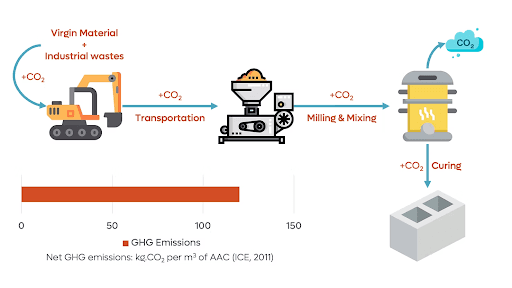
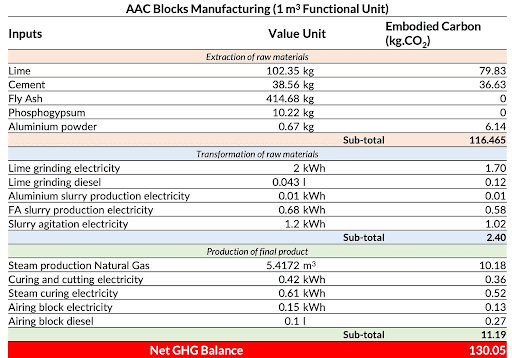
In a nutshell, the manufacturing process is extremely complex, with numerous steps and infinite moving parts. Obviously, it is fungible. The illustration above is an oversimplified manufacturing process infographic. Without going into extreme specifics here, I have outlined the various steps involved in the manufacturing process, along with the associated embodied carbon values in the image below.

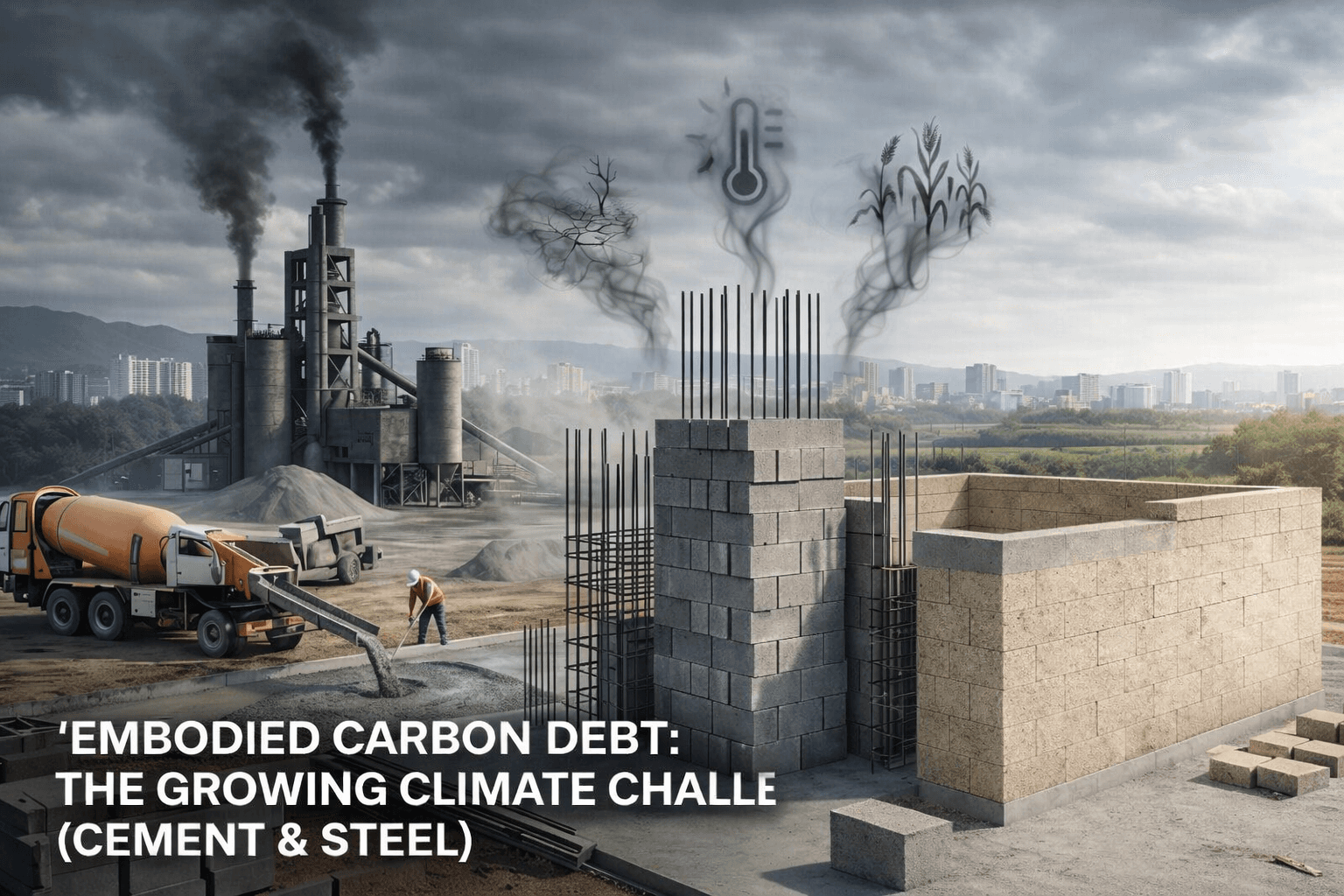
To sum it up, each cubic metre of AAC blocks manufacturing emits about 130 kg of carbon dioxide. A typical 1000 sq ft apartment requires about 40 – 45 cubic metres of AAC blocks, which means that the walls alone would be responsible for 5.2 –5.9 tonnes of carbon dioxide emissions. You would emit as many carbon dioxide emissions if you drove your car a distance of more than 45,000 km! And do you know what's more astonishing? The embodied carbon (which is expressed as a ratio of the mass of carbon dioxide emissions to the mass of the material) of AAC blocks is 0.23 kg.CO2/kg, which is almost as much as the embodied carbon of burnt clay bricks (the most environmentally harmful walling material) at 0.24 kg.CO2/kg. In practice, however, the carbon emissions coming from walls made of AAC blocks would definitely be lower than burnt clay brick walls because of the lighter weight of the material.

But doesn't it make you stop and wonder if AAC blocks are "green" enough?
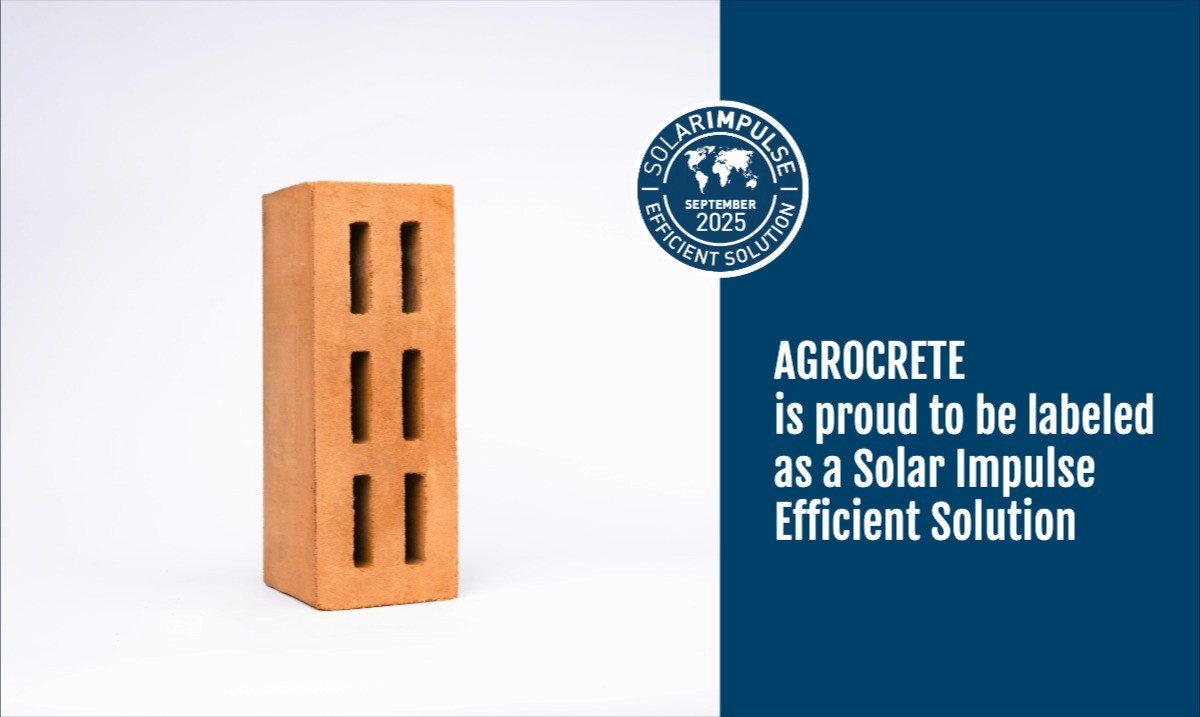
Solar Impulse Certificate- GreenJams

Parting words...

For many people, AAC blocks are at the pinnacle of green construction. And reading through this blog might have been a little uncomfortable. If we were to survive the climate change pandemic, the first step would be to educate ourselves about the perils of the convention. I hope that this blog becomes a first step at doing that for many. Embodied carbon is seldom spoken about in the construction industry. But I'm confident that it shall catch on, just like embodied energy did for the past few decades. Except, we do not have a few decades and we need to start speaking about embodied carbon posthaste.

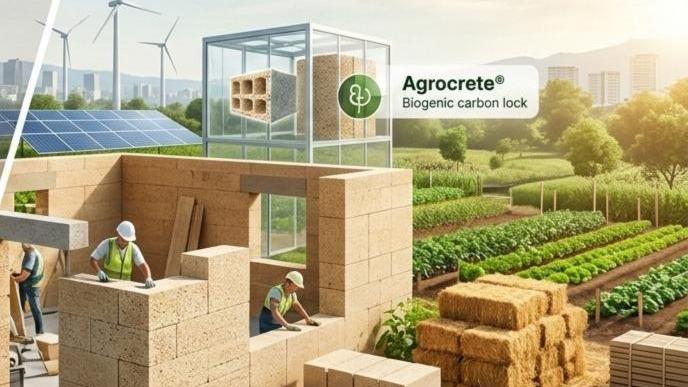
Also, it doesn't make sense to speak about a problem without offering solutions. And we have it in the form of Agrocrete®. More about its advantages over AAC blocks and other materials in the next blog!


References:

https://link.springer.com/article/10.1007/s11356-019-05708-8

https://www.carbonsolutions.com/Resources/ICE%20V2.0%20-%20Jan%202011.xls
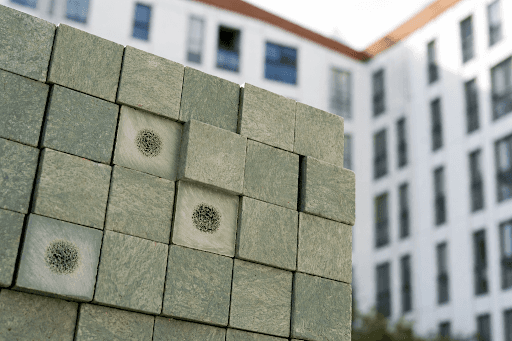
👉 Stay tuned for more updates on how GreenJams is transforming the built environment, one carbon-negative block at a time.
Suggested Blogs

Feb 25, 2026

2 min

Sustainable Construction Materials: The Turning Point in Climate-Positive Building

FOR IMMEDIATE RELEASE

Tags:

Press & Media

Feb 25, 2026

2 min

Climate-Positive Infrastructure vs Net Zero Explained

FOR IMMEDIATE RELEASE

Tags:

Press & Media

Feb 25, 2026

2 min

The Circular Mandate: Circular Construction Future

FOR IMMEDIATE RELEASE

Tags:

Press & Media

Source: RESET — “Revisiting the Iconic Chart from Architecture 2030” (RESET / Raefer Wallis, 2022)

Feb 25, 2026

2 min

Embodied Carbon in Construction: The Climate Debt Explained

FOR IMMEDIATE RELEASE

Tags:

Press & Media

Feb 25, 2026

2 min

Climate-Positive Construction: The Carbon Counter-Attack

FOR IMMEDIATE RELEASE

Tags:

Press & Media

GreenJams’ Agrocrete® Becomes India’s Only Carbon-Negative Building Material to Earn the Prestigious Solar Impulse Efficient Solution Label

Jan 24, 2026

2 min

GreenJams’ Agrocrete® Becomes India’s Only Carbon-Negative Building Material to Earn the Prestigious Solar Impulse Efficient Solution Label

FOR IMMEDIATE RELEASE

Tags:

Press & Media

GreenJams’ Agrocrete® Becomes India’s Only Carbon-Negative Building Material to Earn the Prestigious Solar Impulse Efficient Solution Label

Dec 12, 2025

4 min

Heatwaves and Mivan Construction

‘Mivan Shuttering’ has been a godsend for the construction industry. That’s because Mivan technology enables extremely rapid construction, improves durability and earthquake resistance, and reduces wall thickness and increases carpet area in high rise buildings.

The Mivan construction technology essentially comprises a highly durable aluminium formwork fabricated in the shape and layout of the building including the walls, columns, beams, and slabs. It is extremely modular and uses the same formwork for all the floors of the building. The steel reinforcement is fixed within the formwork and concrete is poured into it to make the different members of the building.

Tags:

Technology

GreenJams’ Agrocrete® Becomes India’s Only Carbon-Negative Building Material to Earn the Prestigious Solar Impulse Efficient Solution Label

Dec 12, 2025

5 min

Agrocrete®: A weapon for the war against climate change

It was never an argument - climate change is real, and it demands urgent action. As per the IPCC 2018 Special Report on Global Warming of 1.5°C, it is estimated that by 2050, if the world isn’t fully carbon neutral, then global temperatures could increase by much more than 1.5C. However, as per Piers Froster, one of the lead authors of the landmark paper, there is still hope. He stated, “If the world can substantially reduce emissions in the 2020s and get to net zero carbon emissions by 2050, temperature rise can still be limited to 1.5C”.

This begs the question - how can we overturn climate change quickly and effectively? The surest way forward is geoengineering, which is essentially a way for human beings to manage the earth’s climate in deliberate ways. An effective, low cost way of geoengineering is to devise methods of Carbon Dioxide Removal, or CDR. Activities such as afforestation and reforestation are popular methods of CDR, however, given the time scale it takes to cause real impact, it isn’t a practical method despite its obvious benefits.

It is for this reason that more and more scientific and institutional efforts are directed towards creating ways of achieving CDR in a highly effective and relatively low-cost manner.

Tags:

product

Suggested Blogs

Feb 25, 2026

2 min

Sustainable Construction Materials: The Turning Point in Climate-Positive Building

FOR IMMEDIATE RELEASE

Tags:

Press & Media

Feb 25, 2026

2 min

Climate-Positive Infrastructure vs Net Zero Explained

FOR IMMEDIATE RELEASE

Tags:

Press & Media

Feb 25, 2026

2 min

The Circular Mandate: Circular Construction Future

FOR IMMEDIATE RELEASE

Tags:

Press & Media

Source: RESET — “Revisiting the Iconic Chart from Architecture 2030” (RESET / Raefer Wallis, 2022)

Feb 25, 2026

2 min

Embodied Carbon in Construction: The Climate Debt Explained

FOR IMMEDIATE RELEASE

Tags:

Press & Media

Feb 25, 2026

2 min

Climate-Positive Construction: The Carbon Counter-Attack

FOR IMMEDIATE RELEASE

Tags:

Press & Media

GreenJams’ Agrocrete® Becomes India’s Only Carbon-Negative Building Material to Earn the Prestigious Solar Impulse Efficient Solution Label

Jan 24, 2026

2 min

GreenJams’ Agrocrete® Becomes India’s Only Carbon-Negative Building Material to Earn the Prestigious Solar Impulse Efficient Solution Label

FOR IMMEDIATE RELEASE

Tags:

Press & Media

Dec 12, 2025

4 min

Heatwaves and Mivan Construction

‘Mivan Shuttering’ has been a godsend for the construction industry. That’s because Mivan technology enables extremely rapid construction, improves durability and earthquake resistance, and reduces wall thickness and increases carpet area in high rise buildings.

The Mivan construction technology essentially comprises a highly durable aluminium formwork fabricated in the shape and layout of the building including the walls, columns, beams, and slabs. It is extremely modular and uses the same formwork for all the floors of the building. The steel reinforcement is fixed within the formwork and concrete is poured into it to make the different members of the building.

Tags:

Technology

Dec 12, 2025

5 min

Agrocrete®: A weapon for the war against climate change

It was never an argument - climate change is real, and it demands urgent action. As per the IPCC 2018 Special Report on Global Warming of 1.5°C, it is estimated that by 2050, if the world isn’t fully carbon neutral, then global temperatures could increase by much more than 1.5C. However, as per Piers Froster, one of the lead authors of the landmark paper, there is still hope. He stated, “If the world can substantially reduce emissions in the 2020s and get to net zero carbon emissions by 2050, temperature rise can still be limited to 1.5C”.

This begs the question - how can we overturn climate change quickly and effectively? The surest way forward is geoengineering, which is essentially a way for human beings to manage the earth’s climate in deliberate ways. An effective, low cost way of geoengineering is to devise methods of Carbon Dioxide Removal, or CDR. Activities such as afforestation and reforestation are popular methods of CDR, however, given the time scale it takes to cause real impact, it isn’t a practical method despite its obvious benefits.

It is for this reason that more and more scientific and institutional efforts are directed towards creating ways of achieving CDR in a highly effective and relatively low-cost manner.

Tags:

product

Frequently asked questions

Have Questions?

We’ve Got Answers.

What is Agrocrete®?

Agrocrete® is a carbon-negative building block made from upcycled crop residues and industrial by-products. It’s stronger, lighter, cooler, and more durable than conventional bricks, while also reducing environmental impact.

What does ‘carbon-negative’ mean?

How is Agrocrete® better than regular bricks?

Is Agrocrete® certified?

Where can it be used?

Is it termite-resistant and fire-resistant?

Will it change my construction process?

What’s its environmental impact?

Frequently asked questions

Have Questions?

We’ve Got Answers.

What is Agrocrete®?

Agrocrete® is a carbon-negative building block made from upcycled crop residues and industrial by-products. It’s stronger, lighter, cooler, and more durable than conventional bricks, while also reducing environmental impact.

What does ‘carbon-negative’ mean?

How is Agrocrete® better than regular bricks?

Is Agrocrete® certified?

Where can it be used?

Is it termite-resistant and fire-resistant?

Will it change my construction process?

What’s its environmental impact?

Frequently asked questions

Have Questions?

We’ve Got Answers.

What is Agrocrete®?

Agrocrete® is a carbon-negative building block made from upcycled crop residues and industrial by-products. It’s stronger, lighter, cooler, and more durable than conventional bricks, while also reducing environmental impact.

What does ‘carbon-negative’ mean?

How is Agrocrete® better than regular bricks?

Is Agrocrete® certified?

Where can it be used?

Is it termite-resistant and fire-resistant?

Will it change my construction process?

What’s its environmental impact?