Written By:
Tarun Jami
9 min
5 Reasons India is Not Ready for Hempcrete... Yet!
Hempcrete has been one of the most researched building materials in the recent times. The staggering amount of research literature being published almost every month hold a light to that fact. As a matter of fact, our Indian shores weren't immune to it either. Several entrepreneurs have been taken hostage by the mania and have forayed into the world of hemp. And one of the most talked about hemp products is hempcrete. But is India really ready for it?
Tags:
product
We have an entirely different construction methodology.
Modern hempcrete was conceived to function as a thermal insulation material for the temperate climes where sub-zero temperatures are a fact of the day. With huge per capita carbon emissions of countries belonging to these climatic zones, it was important to develop a natural insulation material that is moderately strong and energy efficient. Another requirement was that it was needed to be compatible with their timber frame structures.
Thence, in most European applications of hempcrete you will find that it is placed as an in-fill in timber-stud walls. The Indian applications are decidedly different. Our conditions are harsher and our locally available materials are different. The stresses our building materials are subjected to are several degrees higher.
Most Indian buildings use reinforced concrete frames with brick or block infill, or load-bearing masonry, laid in cement mortar. Hempcrete is usually cast or sprayed around a timber frame, or laid as non-load-bearing blocks. Adopting it here therefore means redesigning wall details and construction sequences, not simply swapping one block for another on site.
Why hempcrete was on India's radar in the first place
When GreenJams first wrote about hemp in 2019, the argument started with emissions. World Bank data then put India's per capita CO₂ emissions at 1.73 tonnes in 2014, and a 2017 PBL Netherlands report put them at 1.91 tonnes in 2016, up from about 0.75 tonnes in 1990. The trend has continued: Our World in Data puts India's emissions at 2.2 tonnes of CO₂ per person in 2024.
That is still well below the global average, but the direction matters. According to Mongabay's summary of the UNEP Emissions Gap Report 2025, India's total greenhouse gas emissions grew by 3.6% in 2024, the largest absolute rise of any country. As incomes rise and cities grow, demand for building materials will grow with them.
Most construction materials in India come from mineral sources: clay, sand, limestone and aggregates, fired in kilns or bound with cement. Bio-based materials offer a different route. Plants absorb CO₂ as they grow, and when their stalks are locked into a wall instead of being burnt in the field, that carbon stays out of the atmosphere for the life of the building. Hemp was one of the first crops considered for this role.

We do not yet have a hemp industry.
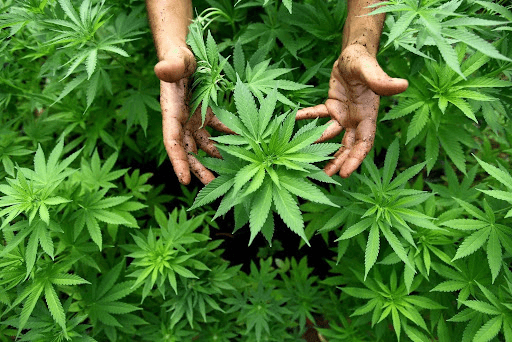
Manufacturing and marketing of hempcrete is predicated on India having a hemp industry. When this post was first written, Uttarakhand had legalised hemp cultivation for industrial purposes, but its state policy called for cultivars with a THC content of between 0.3% and 1.5%. Such cultivars were hard to find in India, and importing seeds from abroad is expensive and not a sustainable business model.
This affects the production of the hemp shivs, the woody core of the stalk, which are used to make hempcrete. By our estimate at the time, a 1,000 sq. ft. hempcrete house needs produce from about one hectare of hemp cultivation. Without a reliable seed supply, there is no reliable supply of shiv, and without shiv there is no hempcrete industry to speak of.
Where hemp cultivation stands in 2026
The central law has not changed. Section 14 of the NDPS Act, 1985 allows the government to permit cannabis cultivation for industrial purposes, only to obtain fibre or seed, or for horticulture, subject to conditions it sets. States use this route to license low-THC hemp, now generally capped at 0.3% THC.
Uttarakhand legalised industrial hemp in 2018, and its facilities at Selakui are among the few places in India that can legally produce certified hemp seed, according to HempToday (June 2026). Uttar Pradesh announced in 2018 that it would issue hemp cultivation permits under Excise Department supervision. We could not find recent public data on how many permits it has issued.
Himachal Pradesh is the newest entrant. Its cabinet approved controlled cannabis cultivation for non-narcotic use in January 2025, alongside a pilot study by the agricultural universities at Palampur and Nauni. By June 2026, no licences had been reported, and operating rules, certified seed and processing infrastructure were still being put in place.
A legal question also remains open. Section 2 of the NDPS Act defines any plant of the genus cannabis as a cannabis plant, whatever its THC content. Legal commentators writing in SCC Online argue that state THC thresholds therefore rest on uncertain ground until Parliament amends that definition. For a builder, that means a raw-material supply chain exposed to regulatory risk.
Its properties are not validated in India.
There are still very few constructions in India whose performance has been validated by scientific investigation to prove hempcrete's suitability for Indian consumers. Even the most basic material characteristics of hempcrete manufactured in India have not been widely determined. We do not yet know how it will behave when it is produced with locally available binders and plant particles.
Needless to say, the manufacturing processes aren't standardised either, resulting in inconsistent material behaviour. A 2020 review in the Journal of Building Engineering found that hemp concrete's properties depend on the quality of the plant aggregate, the binder, the mix proportions and the application technique. Results from Europe cannot simply be transferred to Indian lime, Indian hemp and Indian weather.
What the research does show
Internationally, the evidence on carbon is encouraging but nuanced. Hempcrete stores biogenic carbon in the hemp shiv, and its lime binder slowly reabsorbs CO₂ through carbonation during its service life. A 2020 study by Arehart, Nelson and Srubar in the Journal of Cleaner Production modelled 36 hempcrete mixes and found that carbonation can offset part of the emissions from making the binder.
The same researchers note that not every mix design resulted in net carbon storage: high-density mixes using Portland cement were net emitters. That is a useful caution for any carbon-negative claim. It has to be measured for the specific product, ideally through a third-party-verified Environmental Product Declaration (EPD), rather than assumed for a whole class of materials.
Hempcrete is not recognised by Indian Authorities.
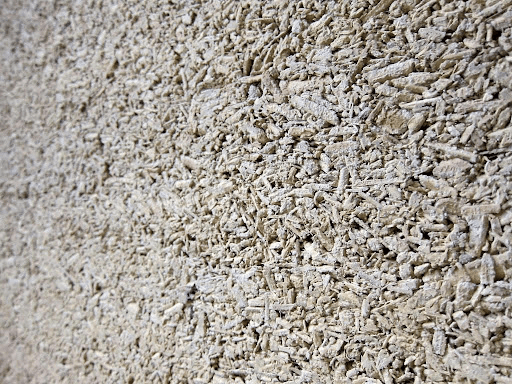
Hempcrete is a variety of vegetal concretes, an emerging class of building materials being actively developed and used in countries like England, France and Belgium. Their authorities have formulated certification and authorisation procedures for the manufacture and use of materials like hempcrete.
In India, such materials are not in great use and public organisations haven't taken it upon themselves to promote or recognise them. The Building Materials & Technology Promotion Council (BMTPC) is responsible for promoting innovative building materials and technologies, and its Performance Appraisal Certification Scheme (PACS) is one route by which a new walling system could be appraised.
The case for hempcrete: what would need to change
None of this means hempcrete has no future in India. In a column first published in Entrepreneur India, GreenJams argued the opposite side: that enterprising builders should consider hempcrete. The arguments still deserve a hearing, because they explain why we started working with bio-based materials in the first place.
The first argument is carbon. Hemp stalks absorb CO₂ as they grow, and a lime binder keeps absorbing a little more as it carbonates. Hempcrete blocks cure passively at ambient temperature, whereas autoclaved aerated concrete is steam-cured under pressure, as we explain in our look at whether AAC blocks are really green. For builders aiming beyond GRIHA or LEED requirements, that is an advantage, provided the carbon balance is verified.
The second is farm income. Every bio-based building material starts on a farm, so buying stalks gives farmers a second income from the same harvest, and processing creates rural jobs. The third is the wider economy: infrastructure built from renewable materials can help seed a bio-based economy in which carbon removal pays for itself rather than depending on subsidies.
For that case to hold in India, several things would need to change: certified low-THC seed at scale, clear and stable licensing across states, Indian test data on strength, fire, moisture and termite performance, a recognised appraisal route, and trained masons. Some of these are now in motion in Uttarakhand and Himachal Pradesh, but none is complete yet.

Building with hempcrete requires a different skill-set.
The consistency and characteristics of hempcrete are different from other building materials such as AAC blocks or fly ash bricks. Production of hempcrete involves raw materials such as lime and plant particles, which local engineers, masons and construction workers are unfamiliar with. For example, traditional building materials involve water curing, whereas lime products require air curing.
The revival of traditional knowledge is the biggest challenge when building with hempcrete. Hempcrete houses also require unconventional finishings which may require greater skills. With enough time and focused effort, these impediments can be overcome, but training masons and site engineers takes years, and it will not happen without a steady market for the material.
Hemp as a carbon removal crop
Beyond buildings, hemp has been proposed as a form of carbon dioxide removal (CDR). Geoengineering covers two broad approaches: removing CO₂ from the air, and reflecting sunlight away from the Earth. The Royal Society's 2009 review of geoengineering concluded that CDR carries relatively low uncertainties and risks and should be preferred, though it works slowly.
Growing fast, high-yield crops on degraded or fallow land is one CDR route. In 2016, GreenJams' own study estimated that each kilogram of hemp stalk sequesters about 1.8 to 2 kg of CO₂, and that a hectare yielding 10 to 15 tonnes of biomass could offset 20 to 30 tonnes of CO₂. These 2016 estimates depend on variety, climate and soil.
Even at that rate, a million hectares of hemp would capture 20 to 30 million tonnes of CO₂ per crop cycle, a small fraction of global emissions. And the carbon is only removed for as long as the biomass is kept from burning or rotting. That is why durable uses, such as building materials, matter more for the climate than short-lived ones.
Hemp and India's development goals
Hemp, Cannabis sativa L., is one of the earliest cultivated crops, used for rope, cloth and food long before it was used in buildings. Today it is being developed for insulation and walling, bioplastics, textiles and carbon materials for supercapacitors. It is often described as a low-input crop, needing relatively little pesticide or fertiliser.
That breadth is why hemp is often linked to the UN Sustainable Development Goals: farm incomes, sustainable industry, responsible production and climate action. Whether it delivers on them in India depends on closing the seed, policy and processing gaps described above, and on how it compares with the crop residues India already has to manage every year.
Where GreenJams is today: from hemp to crop residue
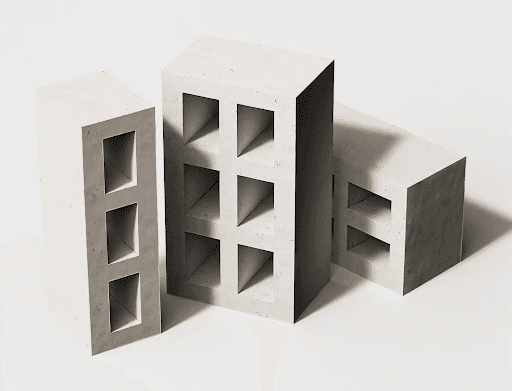
GreenJams began with hempcrete research. While hemp waited on policy, we turned to a raw material India already produces in large quantities and often burns: crop residue. Agrocrete® blocks and bricks are made from paddy straw and fly ash, bound with BINDR™, our alkali-activated binder made from over 90% recycled industrial by-products, with no Portland cement.
The principle is the same as hempcrete: plant carbon locked into a wall instead of released by burning. The difference is supply, since crop residue needs no new licence, seed bank or cultivation policy. Agrocrete® has a third-party-verified EPD registered with the International EPD System, which puts its footprint at about −0.14 kgCO₂e per kg. We explain how it stores carbon in Agrocrete®: a weapon for the war against climate change.
Hempcrete may yet find its place in India, once seed, licensing, standards and skills catch up. When it does, the lessons learned from building with crop residue, from mix design and testing to training masons and earning certification, will help it get there.

 Agrocrete® spec sheet (PDF)