The Empire State could've captured 3000 tons of CO2! - My Framer Site

The Empire State could've captured 3000 tons of CO2!

The Empire State building is one of the most iconic structures in the entire world! It stood the test of time and defied many odds right from its inception. It was built during the Depression in 1930-31 and retained the world's tallest building title for 41 years. In 1972, the World Trade Centre, another historic NYC building, claimed the distinction. At a mere 1250 ft, today it is less than 50% the height of the tallest building in the world, the Burj Khalifa. And yet, it is one of the world's most popular buildings.

The Empire State has another laurel to its kitty: it was built in a record time of 1 year and 45 days by 3000 workers, including Sundays and holidays. But that's not all. It comprises 54,000 metric tonnes of steel, 5,600 cu.m. of Indiana limestone and granite, 660 tons of aluminium and stainless steel, and a whopping 10 million bricks! As a result, it most certainly wasn't the greenest of buildings to begin with. Just the usage of 54,000 metric tonnes of steel would have resulted in about 108,000 tonnes of GHG emissions.

Thursday, July 10, 2025

Written By:

GreenJams

5 min

Tags:

Sustainability

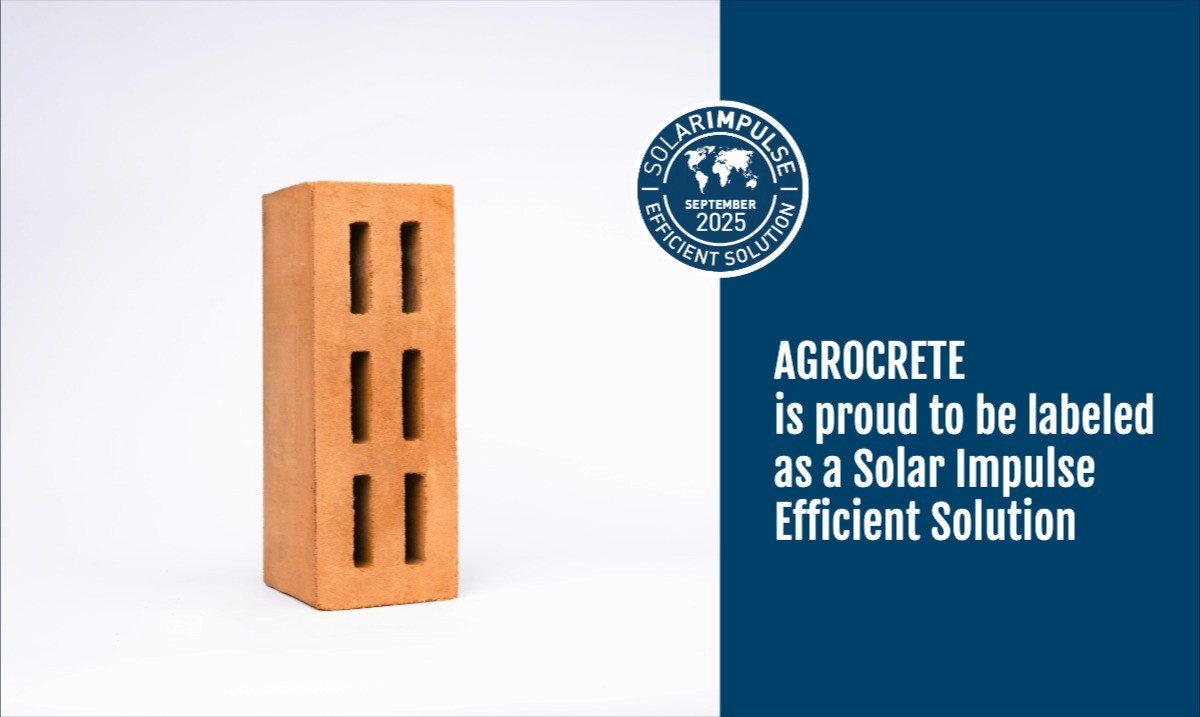
GreenJams’ Agrocrete® Becomes India’s Only Carbon-Negative Building Material to Earn the Prestigious Solar Impulse Efficient Solution Label

...it's considered a white elephant for a completely different reason. The Empire State is not exactly energy efficient.

The Empire State also retains another distinction: one of the world's great white elephants. According to the New York Times, it failed to turn a profit until 1950 simply because it couldn't convince enough tenants to occupy its offices. The Great Depression and World War II were to blame as well. But even in the 2000s, it failed to compete with the sleeker skyscrapers that started redefining New York's skyline. To date, the most valuable assets are the observatory decks, which attract a whopping 4 million visitors annually. But in today's context, it's considered a white elephant for a completely different reason. The Empire State is not exactly energy efficient. In 2009, the annual electricity bill was a mind-boggling US$11 Million! Despite the retrofit to improve the energy efficiency of the building, it still costs at least US$7 Million annually to power it, which brings us to the question...

...What if the Empire State was built using Agrocrete®?

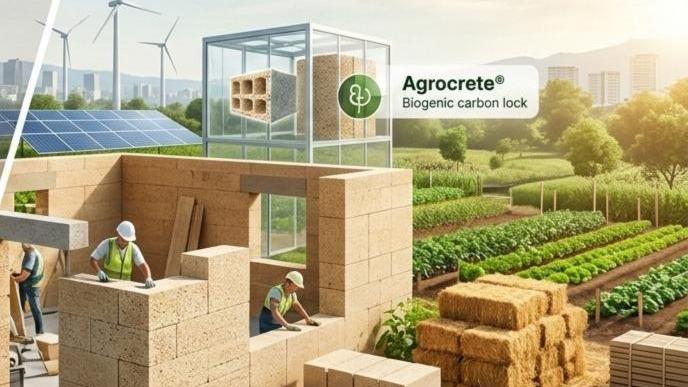
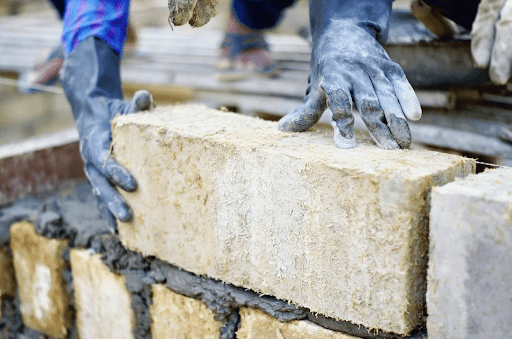
First of all, a disclaimer. I'm not saying that the entire building could be built using Agrocrete®. The many advances in technology, which made the other skyscrapers of NYC more attractive than the famous white elephant, could be put to good use to work with Agrocrete®. As a brick replacement, Agrocrete® blocks would have proferred many benefits that would've reduced its carbon footprint and the cost of its operation - goals the current owner of the Empire State is actively pursuing.

Using Agrocrete® blocks... captured almost 2,900 tonnes of carbon dioxide... consuming almost 17,550,000 kWh lesser annually... 7,000 tonnes of lesser carbon dioxide emissions.

The 10 million bricks used in the construction might have caused around 4,900 tonnes of GHG emissions. Using Agrocrete® blocks instead of the clay bricks would have prevented those emissions and captured almost 2,900 tonnes of carbon dioxide from the atmosphere, offsetting some of the emissions caused by the structural steel, aluminium, and other materials. Admittedly, Agrocrete® couldn't have offset the entire 108,000 tonnes of carbon dioxide emissions from the steel used in the building, but it has another trick up its sleeve.
Solar Impulse Certificate- GreenJams

Thermal insulation.

Before the energy-efficiency retrofit in 2010, the average energy demand for the 2,700,000 sq. ft. building was almost 26 kWh/sq.ft., and this was because clay bricks are extremely poor insulators. After a total expenditure of around $106 million, they could bring down the energy demand to 17.5 kWh/sq.ft., a commendable 38% reduction. But, had the original builders used Agrocrete® blocks instead of the clay bricks (provided Agrocrete® existed in 1931, of course!), the energy demand could have reduced by 25% compared to the base case scenario of clay bricks.

Now, what does that mean?

Pre-retrofit, the Empire State Building made using Agrocrete® would have had an energy demand of only 19.5 kWh/sq.ft., consuming almost 17,550,000 kWh lesser annually, which would have been enough to power almost 1600 households. In CO2 terms, we are talking about 7,000 tonnes of lesser carbon dioxide emissions. You would have to drive an average gasoline car along the Earth's circumference 873 times to cause as many CO2 emissions!

Alas, there isn't much that we can change about the bygone past. But imagine the impact we could create if every new building on this planet is built with Agrocrete®.

👉 Stay tuned for more updates on how GreenJams is transforming the built environment, one carbon-negative block at a time.
Suggested Blogs

Feb 25, 2026

2 min

Sustainable Construction Materials: The Turning Point in Climate-Positive Building

FOR IMMEDIATE RELEASE

Tags:

Press & Media

Feb 25, 2026

2 min

Climate-Positive Infrastructure vs Net Zero Explained

FOR IMMEDIATE RELEASE

Tags:

Press & Media

Feb 25, 2026

2 min

The Circular Mandate: Circular Construction Future

FOR IMMEDIATE RELEASE

Tags:

Press & Media

Source: RESET — “Revisiting the Iconic Chart from Architecture 2030” (RESET / Raefer Wallis, 2022)

Feb 25, 2026

2 min

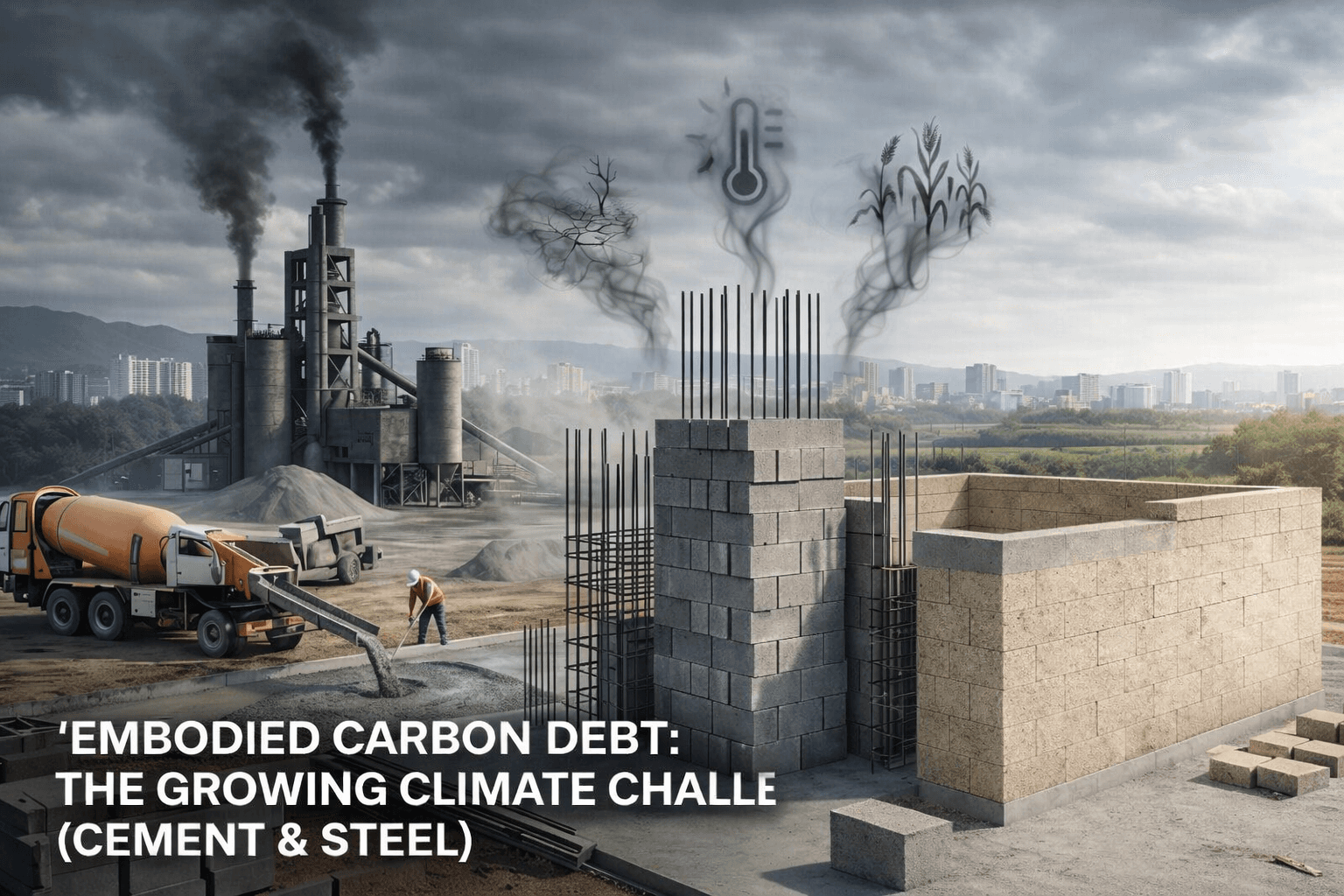
Embodied Carbon in Construction: The Climate Debt Explained

FOR IMMEDIATE RELEASE

Tags:

Press & Media

Feb 25, 2026

2 min

Climate-Positive Construction: The Carbon Counter-Attack

FOR IMMEDIATE RELEASE

Tags:

Press & Media

GreenJams’ Agrocrete® Becomes India’s Only Carbon-Negative Building Material to Earn the Prestigious Solar Impulse Efficient Solution Label

Jan 24, 2026

2 min

GreenJams’ Agrocrete® Becomes India’s Only Carbon-Negative Building Material to Earn the Prestigious Solar Impulse Efficient Solution Label

FOR IMMEDIATE RELEASE

Tags:

Press & Media

GreenJams’ Agrocrete® Becomes India’s Only Carbon-Negative Building Material to Earn the Prestigious Solar Impulse Efficient Solution Label

Dec 12, 2025

4 min

Heatwaves and Mivan Construction

‘Mivan Shuttering’ has been a godsend for the construction industry. That’s because Mivan technology enables extremely rapid construction, improves durability and earthquake resistance, and reduces wall thickness and increases carpet area in high rise buildings.

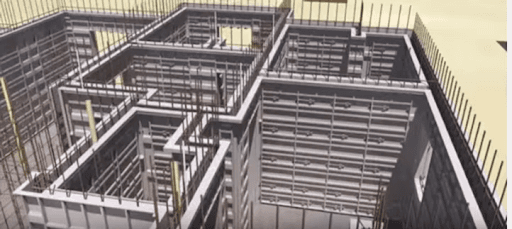
The Mivan construction technology essentially comprises a highly durable aluminium formwork fabricated in the shape and layout of the building including the walls, columns, beams, and slabs. It is extremely modular and uses the same formwork for all the floors of the building. The steel reinforcement is fixed within the formwork and concrete is poured into it to make the different members of the building.

Tags:

Technology

GreenJams’ Agrocrete® Becomes India’s Only Carbon-Negative Building Material to Earn the Prestigious Solar Impulse Efficient Solution Label

Dec 12, 2025

5 min

Agrocrete®: A weapon for the war against climate change

It was never an argument - climate change is real, and it demands urgent action. As per the IPCC 2018 Special Report on Global Warming of 1.5°C, it is estimated that by 2050, if the world isn’t fully carbon neutral, then global temperatures could increase by much more than 1.5C. However, as per Piers Froster, one of the lead authors of the landmark paper, there is still hope. He stated, “If the world can substantially reduce emissions in the 2020s and get to net zero carbon emissions by 2050, temperature rise can still be limited to 1.5C”.

This begs the question - how can we overturn climate change quickly and effectively? The surest way forward is geoengineering, which is essentially a way for human beings to manage the earth’s climate in deliberate ways. An effective, low cost way of geoengineering is to devise methods of Carbon Dioxide Removal, or CDR. Activities such as afforestation and reforestation are popular methods of CDR, however, given the time scale it takes to cause real impact, it isn’t a practical method despite its obvious benefits.

It is for this reason that more and more scientific and institutional efforts are directed towards creating ways of achieving CDR in a highly effective and relatively low-cost manner.

Tags:

product

Suggested Blogs

Feb 25, 2026

2 min

Sustainable Construction Materials: The Turning Point in Climate-Positive Building

FOR IMMEDIATE RELEASE

Tags:

Press & Media

Feb 25, 2026

2 min

Climate-Positive Infrastructure vs Net Zero Explained

FOR IMMEDIATE RELEASE

Tags:

Press & Media

Feb 25, 2026

2 min

The Circular Mandate: Circular Construction Future

FOR IMMEDIATE RELEASE

Tags:

Press & Media

Source: RESET — “Revisiting the Iconic Chart from Architecture 2030” (RESET / Raefer Wallis, 2022)

Feb 25, 2026

2 min

Embodied Carbon in Construction: The Climate Debt Explained

FOR IMMEDIATE RELEASE

Tags:

Press & Media

Feb 25, 2026

2 min

Climate-Positive Construction: The Carbon Counter-Attack

FOR IMMEDIATE RELEASE

Tags:

Press & Media

GreenJams’ Agrocrete® Becomes India’s Only Carbon-Negative Building Material to Earn the Prestigious Solar Impulse Efficient Solution Label

Jan 24, 2026

2 min

GreenJams’ Agrocrete® Becomes India’s Only Carbon-Negative Building Material to Earn the Prestigious Solar Impulse Efficient Solution Label

FOR IMMEDIATE RELEASE

Tags:

Press & Media

Dec 12, 2025

4 min

Heatwaves and Mivan Construction

‘Mivan Shuttering’ has been a godsend for the construction industry. That’s because Mivan technology enables extremely rapid construction, improves durability and earthquake resistance, and reduces wall thickness and increases carpet area in high rise buildings.

The Mivan construction technology essentially comprises a highly durable aluminium formwork fabricated in the shape and layout of the building including the walls, columns, beams, and slabs. It is extremely modular and uses the same formwork for all the floors of the building. The steel reinforcement is fixed within the formwork and concrete is poured into it to make the different members of the building.

Tags:

Technology

Dec 12, 2025

5 min

Agrocrete®: A weapon for the war against climate change

It was never an argument - climate change is real, and it demands urgent action. As per the IPCC 2018 Special Report on Global Warming of 1.5°C, it is estimated that by 2050, if the world isn’t fully carbon neutral, then global temperatures could increase by much more than 1.5C. However, as per Piers Froster, one of the lead authors of the landmark paper, there is still hope. He stated, “If the world can substantially reduce emissions in the 2020s and get to net zero carbon emissions by 2050, temperature rise can still be limited to 1.5C”.

This begs the question - how can we overturn climate change quickly and effectively? The surest way forward is geoengineering, which is essentially a way for human beings to manage the earth’s climate in deliberate ways. An effective, low cost way of geoengineering is to devise methods of Carbon Dioxide Removal, or CDR. Activities such as afforestation and reforestation are popular methods of CDR, however, given the time scale it takes to cause real impact, it isn’t a practical method despite its obvious benefits.

It is for this reason that more and more scientific and institutional efforts are directed towards creating ways of achieving CDR in a highly effective and relatively low-cost manner.

Tags:

product

Frequently asked questions

Have Questions?

We’ve Got Answers.

What is Agrocrete®?

Agrocrete® is a carbon-negative building block made from upcycled crop residues and industrial by-products. It’s stronger, lighter, cooler, and more durable than conventional bricks, while also reducing environmental impact.

What does ‘carbon-negative’ mean?

How is Agrocrete® better than regular bricks?

Is Agrocrete® certified?

Where can it be used?

Is it termite-resistant and fire-resistant?

Will it change my construction process?

What’s its environmental impact?

Frequently asked questions

Have Questions?

We’ve Got Answers.

What is Agrocrete®?

Agrocrete® is a carbon-negative building block made from upcycled crop residues and industrial by-products. It’s stronger, lighter, cooler, and more durable than conventional bricks, while also reducing environmental impact.

What does ‘carbon-negative’ mean?

How is Agrocrete® better than regular bricks?

Is Agrocrete® certified?

Where can it be used?

Is it termite-resistant and fire-resistant?

Will it change my construction process?

What’s its environmental impact?

Frequently asked questions

Have Questions?

We’ve Got Answers.

What is Agrocrete®?

Agrocrete® is a carbon-negative building block made from upcycled crop residues and industrial by-products. It’s stronger, lighter, cooler, and more durable than conventional bricks, while also reducing environmental impact.

What does ‘carbon-negative’ mean?

How is Agrocrete® better than regular bricks?

Is Agrocrete® certified?

Where can it be used?

Is it termite-resistant and fire-resistant?

Will it change my construction process?

What’s its environmental impact?