4 Principles of Cost Estimation - My Framer Site

4 Principles of Cost Estimation

Cost estimation in project management is the process of forecasting the cost and other resources needed to complete a project within a defined scope. Cost estimation accounts for each element required for the project and calculates a total amount that determines a project's budget.

Friday, December 12, 2025

Written By:

GreenJams

3 min

Tags:

Sustainability

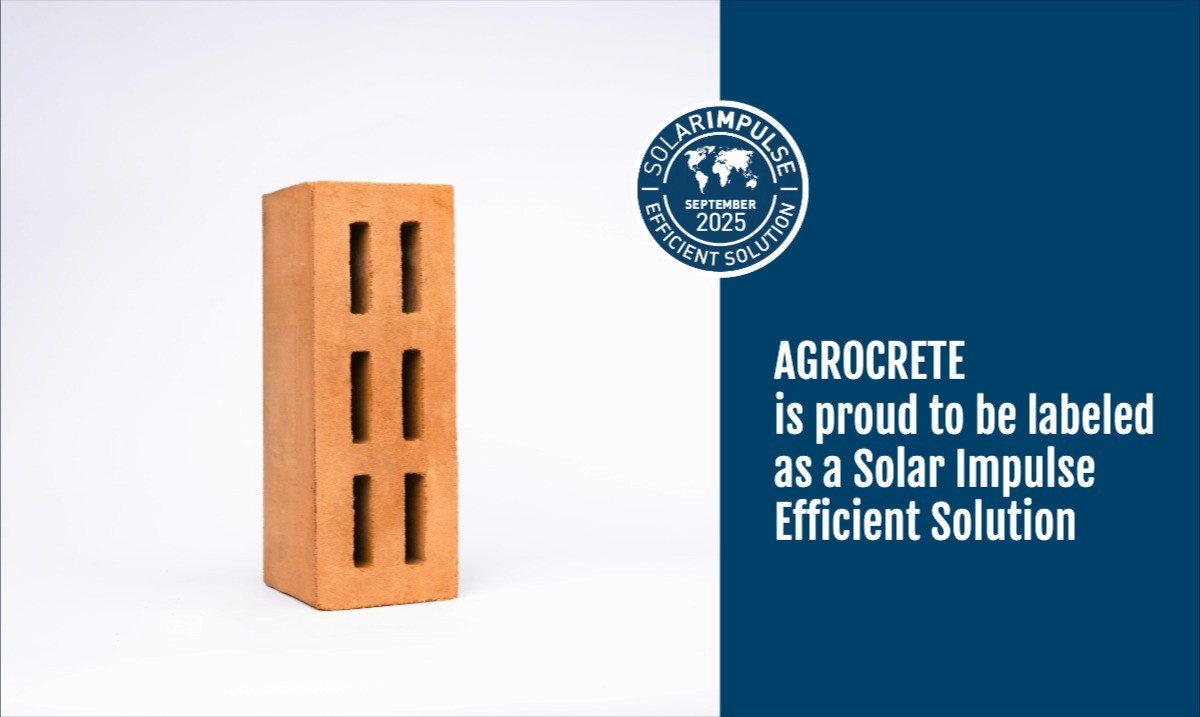
GreenJams’ Agrocrete® Becomes India’s Only Carbon-Negative Building Material to Earn the Prestigious Solar Impulse Efficient Solution Label

The 4 principles of cost estimation

1. Cost estimation is used to predict the quantity, cost and price of the resources required by the scope of a project. The accuracy of the estimate depends heavily on the level of project scope definition: as the design and conditions of the project become better defined, so do the estimated values.

2. Cost estimation is needed to provide decision-makers with the means to make investment decisions, choose between alternatives and to set up the budget during the front end of projects.

Related to this principle, it is always challenging to collect and read the huge amount of cost data, which doesn’t help with the decision making. Analyzing and visualizing the cost data opens the doors to making the data useful and meaningful. The dashboards of a project control software system are the data-driven graphical representations of a project; dashboards can provide decision-makers with a quick overview of a project’s progress and turn the data into decision points.

3. Estimating is done by breaking down the total scope of a project in manageable parts, to which resources can be assigned and cost. There are standardised ways of breaking down a project, like the Work Breakdown Structure (WBS) and the Cost Breakdown Structure (CBS), but depending on the needs of the project team and external parties’ multiple structures are often implemented to align reporting and sharing of cost data.

4. A cost estimate is more than a list of costs. It also includes a detailed Basis of Estimate (BOE) report that describes the assumptions, inclusions, exclusions, accuracy and other aspects that are needed to interpret the total project cost. Otherwise, it would be a meaningless number. The BOE is required to communicate the estimate to the various parties involved in the decision making but is also handy during closeout when the performance of the project is compared with other projects. It is the vital part often overlooked, that allows you to learn from your experience and mistakes.

Cost estimation, however, is easier said than done. An accurate estimation method can be the difference between a successful plan and a failed one. Keep these 4 principles in mind and you already have a framework to start making estimates.

👉 Stay tuned for more updates on how GreenJams is transforming the built environment, one carbon-negative block at a time.


Suggested Blogs

Feb 25, 2026

2 min

Sustainable Construction Materials: The Turning Point in Climate-Positive Building

FOR IMMEDIATE RELEASE

Tags:

Press & Media

Feb 25, 2026

2 min

Climate-Positive Infrastructure vs Net Zero Explained

FOR IMMEDIATE RELEASE

Tags:

Press & Media

Feb 25, 2026

2 min

The Circular Mandate: Circular Construction Future

FOR IMMEDIATE RELEASE

Tags:

Press & Media

Source: RESET — “Revisiting the Iconic Chart from Architecture 2030” (RESET / Raefer Wallis, 2022)

Feb 25, 2026

2 min

Embodied Carbon in Construction: The Climate Debt Explained

FOR IMMEDIATE RELEASE

Tags:

Press & Media

Feb 25, 2026

2 min

Climate-Positive Construction: The Carbon Counter-Attack

FOR IMMEDIATE RELEASE

Tags:

Press & Media

GreenJams’ Agrocrete® Becomes India’s Only Carbon-Negative Building Material to Earn the Prestigious Solar Impulse Efficient Solution Label

Jan 24, 2026

2 min

GreenJams’ Agrocrete® Becomes India’s Only Carbon-Negative Building Material to Earn the Prestigious Solar Impulse Efficient Solution Label

FOR IMMEDIATE RELEASE

Tags:

Press & Media

GreenJams’ Agrocrete® Becomes India’s Only Carbon-Negative Building Material to Earn the Prestigious Solar Impulse Efficient Solution Label

Dec 12, 2025

4 min

Heatwaves and Mivan Construction

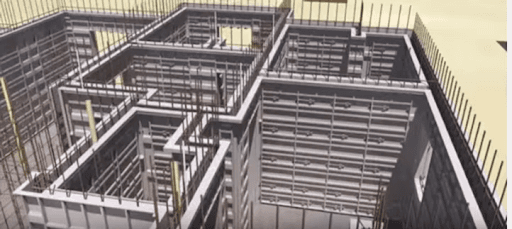
‘Mivan Shuttering’ has been a godsend for the construction industry. That’s because Mivan technology enables extremely rapid construction, improves durability and earthquake resistance, and reduces wall thickness and increases carpet area in high rise buildings.

The Mivan construction technology essentially comprises a highly durable aluminium formwork fabricated in the shape and layout of the building including the walls, columns, beams, and slabs. It is extremely modular and uses the same formwork for all the floors of the building. The steel reinforcement is fixed within the formwork and concrete is poured into it to make the different members of the building.

Tags:

Technology

GreenJams’ Agrocrete® Becomes India’s Only Carbon-Negative Building Material to Earn the Prestigious Solar Impulse Efficient Solution Label

Dec 12, 2025

5 min

Agrocrete®: A weapon for the war against climate change

It was never an argument - climate change is real, and it demands urgent action. As per the IPCC 2018 Special Report on Global Warming of 1.5°C, it is estimated that by 2050, if the world isn’t fully carbon neutral, then global temperatures could increase by much more than 1.5C. However, as per Piers Froster, one of the lead authors of the landmark paper, there is still hope. He stated, “If the world can substantially reduce emissions in the 2020s and get to net zero carbon emissions by 2050, temperature rise can still be limited to 1.5C”.

This begs the question - how can we overturn climate change quickly and effectively? The surest way forward is geoengineering, which is essentially a way for human beings to manage the earth’s climate in deliberate ways. An effective, low cost way of geoengineering is to devise methods of Carbon Dioxide Removal, or CDR. Activities such as afforestation and reforestation are popular methods of CDR, however, given the time scale it takes to cause real impact, it isn’t a practical method despite its obvious benefits.

It is for this reason that more and more scientific and institutional efforts are directed towards creating ways of achieving CDR in a highly effective and relatively low-cost manner.

Tags:

product

Suggested Blogs

Feb 25, 2026

2 min

Sustainable Construction Materials: The Turning Point in Climate-Positive Building

FOR IMMEDIATE RELEASE

Tags:

Press & Media

Feb 25, 2026

2 min

Climate-Positive Infrastructure vs Net Zero Explained

FOR IMMEDIATE RELEASE

Tags:

Press & Media

Feb 25, 2026

2 min

The Circular Mandate: Circular Construction Future

FOR IMMEDIATE RELEASE

Tags:

Press & Media

Source: RESET — “Revisiting the Iconic Chart from Architecture 2030” (RESET / Raefer Wallis, 2022)

Feb 25, 2026

2 min

Embodied Carbon in Construction: The Climate Debt Explained

FOR IMMEDIATE RELEASE

Tags:

Press & Media

Feb 25, 2026

2 min

Climate-Positive Construction: The Carbon Counter-Attack

FOR IMMEDIATE RELEASE

Tags:

Press & Media

GreenJams’ Agrocrete® Becomes India’s Only Carbon-Negative Building Material to Earn the Prestigious Solar Impulse Efficient Solution Label

Jan 24, 2026

2 min

GreenJams’ Agrocrete® Becomes India’s Only Carbon-Negative Building Material to Earn the Prestigious Solar Impulse Efficient Solution Label

FOR IMMEDIATE RELEASE

Tags:

Press & Media

Dec 12, 2025

4 min

Heatwaves and Mivan Construction

‘Mivan Shuttering’ has been a godsend for the construction industry. That’s because Mivan technology enables extremely rapid construction, improves durability and earthquake resistance, and reduces wall thickness and increases carpet area in high rise buildings.

The Mivan construction technology essentially comprises a highly durable aluminium formwork fabricated in the shape and layout of the building including the walls, columns, beams, and slabs. It is extremely modular and uses the same formwork for all the floors of the building. The steel reinforcement is fixed within the formwork and concrete is poured into it to make the different members of the building.

Tags:

Technology

Dec 12, 2025

5 min

Agrocrete®: A weapon for the war against climate change

It was never an argument - climate change is real, and it demands urgent action. As per the IPCC 2018 Special Report on Global Warming of 1.5°C, it is estimated that by 2050, if the world isn’t fully carbon neutral, then global temperatures could increase by much more than 1.5C. However, as per Piers Froster, one of the lead authors of the landmark paper, there is still hope. He stated, “If the world can substantially reduce emissions in the 2020s and get to net zero carbon emissions by 2050, temperature rise can still be limited to 1.5C”.

This begs the question - how can we overturn climate change quickly and effectively? The surest way forward is geoengineering, which is essentially a way for human beings to manage the earth’s climate in deliberate ways. An effective, low cost way of geoengineering is to devise methods of Carbon Dioxide Removal, or CDR. Activities such as afforestation and reforestation are popular methods of CDR, however, given the time scale it takes to cause real impact, it isn’t a practical method despite its obvious benefits.

It is for this reason that more and more scientific and institutional efforts are directed towards creating ways of achieving CDR in a highly effective and relatively low-cost manner.

Tags:

product

Frequently asked questions

Have Questions?

We’ve Got Answers.

What is Agrocrete®?

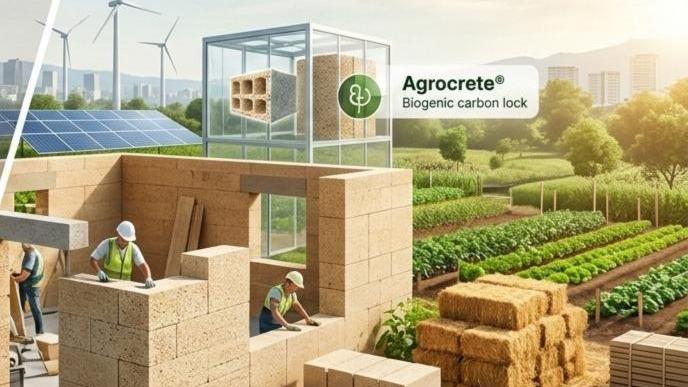
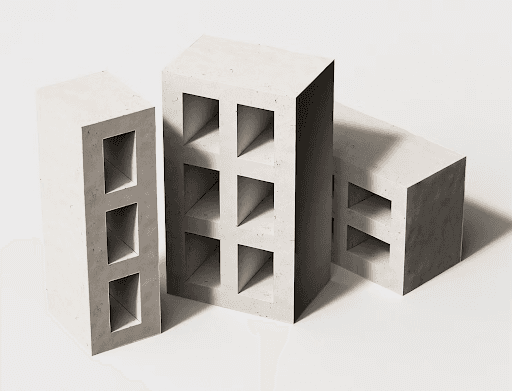
Agrocrete® is a carbon-negative building block made from upcycled crop residues and industrial by-products. It’s stronger, lighter, cooler, and more durable than conventional bricks, while also reducing environmental impact.

What does ‘carbon-negative’ mean?

How is Agrocrete® better than regular bricks?

Is Agrocrete® certified?

Where can it be used?

Is it termite-resistant and fire-resistant?

Will it change my construction process?

What’s its environmental impact?

Frequently asked questions

Have Questions?

We’ve Got Answers.

What is Agrocrete®?

Agrocrete® is a carbon-negative building block made from upcycled crop residues and industrial by-products. It’s stronger, lighter, cooler, and more durable than conventional bricks, while also reducing environmental impact.

What does ‘carbon-negative’ mean?

How is Agrocrete® better than regular bricks?

Is Agrocrete® certified?

Where can it be used?

Is it termite-resistant and fire-resistant?

Will it change my construction process?

What’s its environmental impact?

Frequently asked questions

Have Questions?

We’ve Got Answers.

What is Agrocrete®?

Agrocrete® is a carbon-negative building block made from upcycled crop residues and industrial by-products. It’s stronger, lighter, cooler, and more durable than conventional bricks, while also reducing environmental impact.

What does ‘carbon-negative’ mean?

How is Agrocrete® better than regular bricks?

Is Agrocrete® certified?

Where can it be used?

Is it termite-resistant and fire-resistant?

Will it change my construction process?

What’s its environmental impact?